
What does gloam mean?
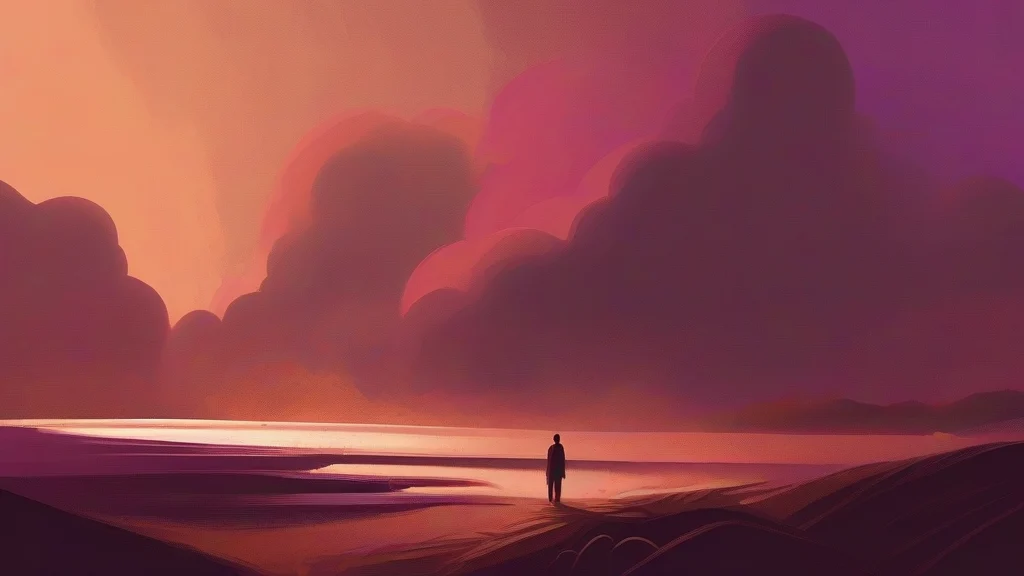
Gloam is a literary noun for the dim, fading light of twilight, particularly the period immediately after sunset. It evokes the transitional moment when daylight is disappearing but darkness has not fully arrived, often with an atmosphere of stillness, mist, shadow, or blue-grey light. The word can also suggest vague gloom or an indefinable darkness, especially in poetry and evocative prose. Although associated especially with Scottish and northern English usage, it is now encountered in literary English more broadly. Its rarity gives ordinary descriptions of evening a heightened, slightly nostalgic quality: a landscape can be said to vanish into the gloam, or a figure can appear briefly in it before darkness conceals the path. Gloam is related etymologically to gloom, but where “gloom” commonly emphasizes heaviness or foreboding, “gloam” usually points more directly to the visual atmosphere of twilight. It is consequently a precise and evocative word for the liminal light between day and night.
nounThe dim light of twilight or dusk, especially the fading light just after sunset. By extension, it can refer to a vague, poetic atmosphere of gloom or darkness.
- The dim or fading light of twilight, especially after sunset.
- A poetic sense for vague darkness, shadow, or an atmosphere of gloom.
"The mountains turned blue in the gloam as the last light slipped from the valley."
"A pale mist gathered in the gloam beyond the cottages."
"He returned through the gloam, his figure briefly visible before the trees swallowed it."
A rare plural; gloam is normally used in the singular.
"The winter gloams seemed to linger all evening."
Gloam is the twilight hinge of the day: neither full light nor full night.
Reviewed by Deb Chak, Editor. AI-assisted content curated by RJS Tech Solutions LLP.
Where does gloam come from?
Gloam is a late-16th-century English word whose precise formation is not entirely certain. It is closely associated with gloom and was also used in Scots, where it became especially familiar in poetry and descriptions of evening. Its later poetic associations with vague darkness and melancholy developed from this established connection with gloom.
How gloam is actually used
Gloam is an elevated, literary word and is also associated with Scottish and northern English usage. In contemporary prose it can sound atmospheric, nostalgic, or deliberately poetic rather than neutral.
Easily confused with gloam
Gloam usually names twilight light or the dim period after sunset, whereas gloom more often means darkness, heaviness, or an atmosphere of foreboding.