
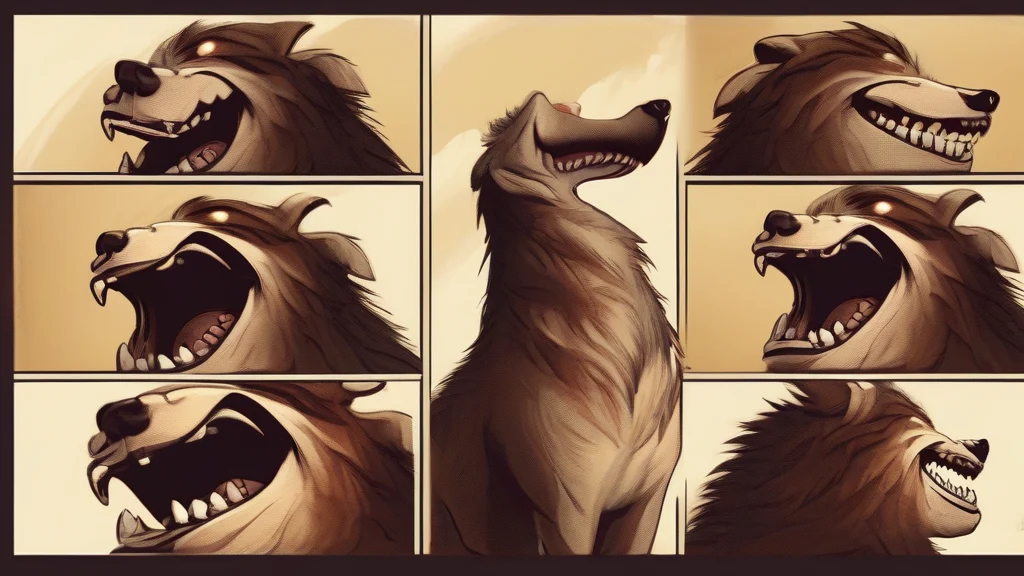
What does gnasher mean?
Gnasher is chiefly a British noun for a person or animal known to bite, especially a dog that snaps or lunges. It can also describe a person, often a child, who bites, in which case it is normally a dismissive and potentially insulting label. In animal contexts, the word is practical rather than affectionate: calling a dog a gnasher identifies it as dangerous and warns others to be careful. Applied to people, it implies aggressiveness, uncontrollability, or general troublemaking. The word is related to gnash, a verb for grinding the teeth together, but a gnasher names the biter rather than the action. The compact expression is consequently more evocative than the neutral words dog or person. It is especially memorable in descriptions of an unreliable pet and in children’s language, where an animal that bites becomes a familiar character as much as a hazard.
nounA person or animal that bites, especially a dog known for biting or snapping.
- A dog or other animal that bites, especially one known to snap at people or other animals.
- A person who bites, typically used dismissively of an aggressive or troublesome individual.
"The landlord kept the gnasher locked away whenever visitors came to the door."
"The gnasher was kept at the far end of the garden, away from the children."
"His younger brother was such a gnasher that the family rarely let him near the baby."
The regular plural is gnashers.
"The two gnashers were separated before the owner could intervene."
A gnasher is not merely an animal with teeth—it is one whose teeth are part of the warning.
Reviewed by Deb Chak, Editor. AI-assisted content curated by RJS Tech Solutions LLP.
Where does gnasher come from?
Gnasher is an English noun formed from gnash with the agent suffix -er. The related verb gnash is attested in Middle English and continues Old English gnæstan, a Germanic verb meaning to grind the teeth together. The noun became especially associated with British usage for a biting dog or other animal.
How gnasher is actually used
The word is chiefly British and informal. For an animal it identifies a habitual biter; for a person it is generally disparaging and implies aggression or rowdiness.
Easily confused with gnasher
Gnash is a verb meaning to grind the teeth together, whereas a gnasher is a person or animal that bites.