
What does gobbed mean?
Gobbed is the simple past tense and past participle of gob. Its usual sense is to have eaten or swallowed food quickly, eagerly, and often without much ceremony: “He gobbled down his breakfast.” The word carries an informal, slightly impatient or comic tone, presenting the eater as greedy, hurried, or unconcerned with table manners. In British English, gob also means to spit or expectorate, so gobbed can describe forcefully expelling saliva or mucus, as in a child gobbing into a sink after coughing. This second use is especially characteristic of informal British speech and is much less common than the eating sense. Gobbed is normally an inflected form rather than a word used independently for a person or object. Its vocabulary relatives include gob, gobble, and gobbet, reflecting an older English and French word associated with a lump or mass. Understanding gobbed therefore depends partly on recognizing its verb: it means “gobbled” in the eating sense and “spat” in the chiefly British expectoration sense.
verb (past tense and past participle)To eat or swallow food quickly and greedily. In British informal use, it can also mean to spit or expectorate forcefully.
- To eat or swallow food quickly and greedily.
- To spit or expectorate forcefully, especially saliva or mucus.
"She gobbled down the last sandwich before the meeting."
"He gobbled down his breakfast while watching the news."
"The child gobbled into the sink after coughing."
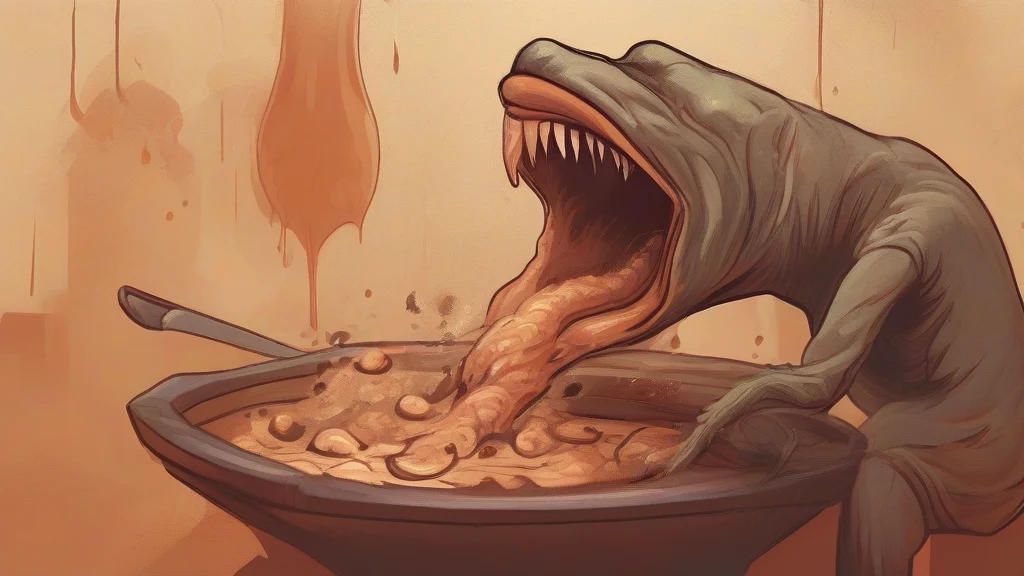
Two appetites in one: gobbed can mean swallowed greedily or, in British slang, spat out.
Reviewed by Deb Chak, Editor. AI-assisted content curated by RJS Tech Solutions LLP.
Where does gobbed come from?
Gobbed is the past tense and past participle of gob. The English verb dates from the late 16th century and is commonly connected to Middle English gob, a word for a lump or mass, borrowed from Old French gobbe; the ultimate origin of the French word is uncertain. The wider family includes gobble and gobbet, both associated with Old French forms based on gob.
Related word forms
How gobbed is actually used
The eating sense is informal and often conveys greed, haste, or disregard for table manners. The expectoration sense is especially associated with informal British speech and is much less common.
Easily confused with gobbed
Gobbed is the past tense of gob, whereas gobbled is the past tense of gobble.