
What does goosefish mean?
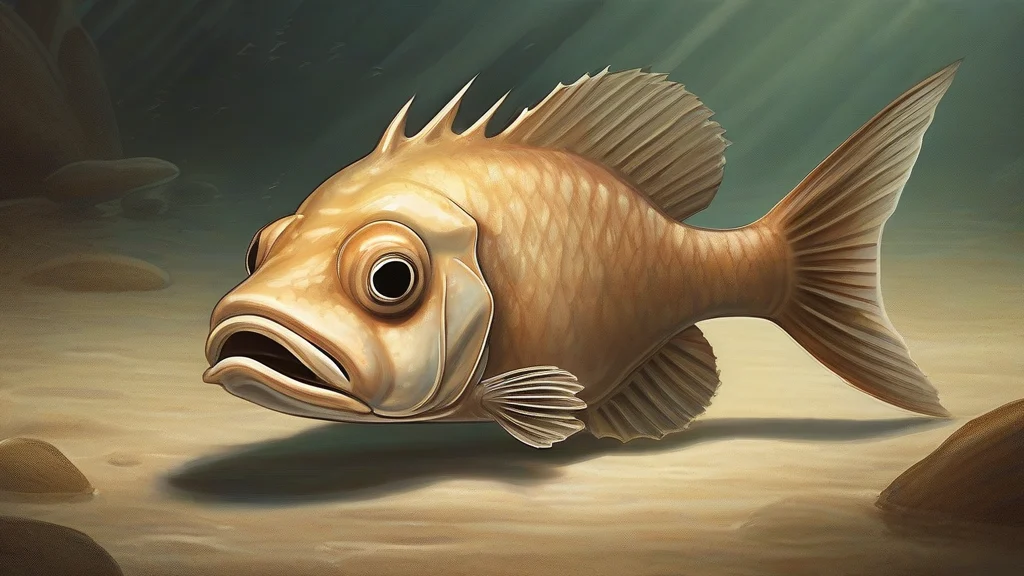
Goosefish is chiefly a North American name for a group of bottom-dwelling marine anglerfishes, particularly the common goosefish, Lophius piscatorius. These fish have broad, flattened heads, enormous mouths, and mottled bodies that help them blend into sandy or rubble-strewn seabeds. A modified dorsal spine carries a fleshy lure that the fish uses to attract small prey near its mouth. In culinary and commercial contexts, goosefish may be sold whole or filleted, and its firm, delicately flavored flesh is highly prized; the cheeks are also regarded as a particularly valuable portion. The name “monkfish” is frequently used for the same or related species, especially in markets, while “anglerfish” refers to a much broader group of fishes. Goosefish also functions as a verb meaning “to fish for goosefish.” The word is distinctive not only for its unusual appearance but also for combining a fishing method with a striking resemblance to a goose.
Any of various bottom-dwelling marine anglerfishes in the family Lophiidae, especially the common goosefish, Lophius piscatorius, characterized by a broad, flattened head, a large mouth, and a lure-bearing dorsal spine.
"The fishermen caught a large goosefish in their nets."
In North American usage, “goosefish” usually denotes Lophius piscatorius, although related Lophius species may also be included informally.
To fish for goosefish.
"They goosefished off the coast throughout the summer."
The verb is chiefly used in North American English and is more common in fisheries and recreational-fishing contexts than in general conversation.
The plural is normally unchanged, though “goosefishes” is also used, especially when referring to multiple kinds or in more formal usage.
"Several goosefish were displayed at the seafood market."
A goosefish carries its own fishing rod: a modified dorsal spine dangles above its enormous mouth like a lure.
Reviewed by Deb Chak, Editor. AI-assisted content curated by RJS Tech Solutions LLP.
Where does goosefish come from?
The word is an English compound of “goose” and “fish,” recorded from the early 17th century. Its name is traditionally associated with the fish's long, flattened snout, which was likened to a goose's bill. English cognate forms include “gander” and “gosling,” while compounds such as “gooseberry” and “goosefoot” preserve the same underlying “goose” root.
Related word forms
How goosefish is actually used
The noun is especially common in North American seafood, fisheries, and biological contexts. British usage often favors “monkfish” for the same or closely related fish; the verb is chiefly North American.
Easily confused with goosefish
Monkfish is the broader commercial name for several Lophius species, while goosefish usually refers to the common goosefish, Lophius piscatorius.
Anglerfish names a much larger and more diverse group of fishes, whereas goosefish specifically belongs to the family Lophiidae.