
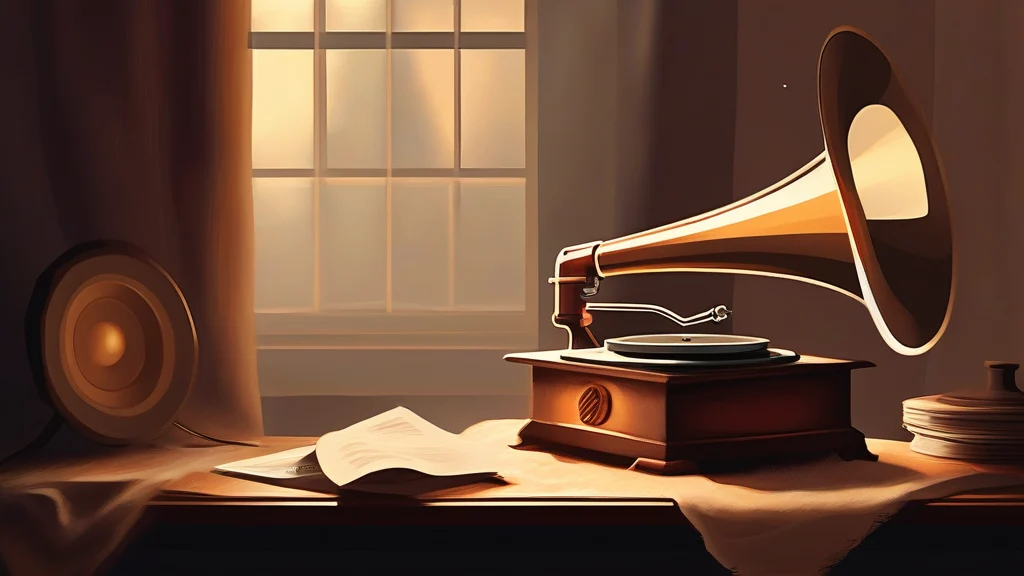
What does gramophone mean?
The gramophone is a machine for playing sound recorded on a grooved disc. Its name and image became closely associated with early commercial sound recording, especially in Britain, although the technology developed from several competing systems in the United States and Europe. Today, “gramophone” is often nostalgic rather than strictly technical: it may refer to an antique wind-up machine, a more general record player, or even the act and ritual of listening to records. In British usage, the term is still familiar, usually with a historical or affectionate tone; in North American English, “phonograph” is more usual, and “gramophone” can sound old-fashioned. A gramophone differs from a modern stereo system chiefly in its mechanism and cultural associations, not in the basic purpose of reproducing recorded music or speech. The word is especially useful when discussing how sound became a reproducible domestic experience.
nounA device for reproducing recorded sound from a rotating grooved disc, now chiefly remembered as a historical form of record player.
- A machine for reproducing recorded sound from a grooved disc, especially an early or antique record player.
"She wound the gramophone and listened to an old orchestral recording."
"He carefully replaced the needle on his gramophone before playing the record."
"The gramophone provided the soundtrack for an old family scene."
The regular plural is “gramophones.” The word can also function attributively, as in “gramophone record.”
"Two gramophones stood on opposite sides of the room."
The name gramophone was coined in 1887, joining the Greek roots for “record” and “sound” to describe a new way of bringing music into the home.
Reviewed by Deb Chak, Editor. AI-assisted content curated by RJS Tech Solutions LLP.
Where does gramophone come from?
The word was coined in 1887 by William Bell, who worked with the Volta Graphophone Company, for a disc-based sound-reproducing machine developed from the graphophone. The name combines Greek gramma, associated with a letter or written record, with -phone, from Greek phōnē, meaning sound or voice. Related terms such as phonograph and phonography belong to the same modern tradition of naming technologies for recording, writing, and reproducing sound.
Related word forms
How gramophone is actually used
The word often carries a nostalgic or historical tone and may refer specifically to an antique wind-up machine. It remains familiar in British and Indian English but can sound old-fashioned in North American English, where “record player” or “phonograph” is more usual.
Easily confused with gramophone
A gramophone is the chiefly British name for a record player, whereas phonograph is the usual North American term; historically, the names also referred to different machines using discs and cylinders respectively.