
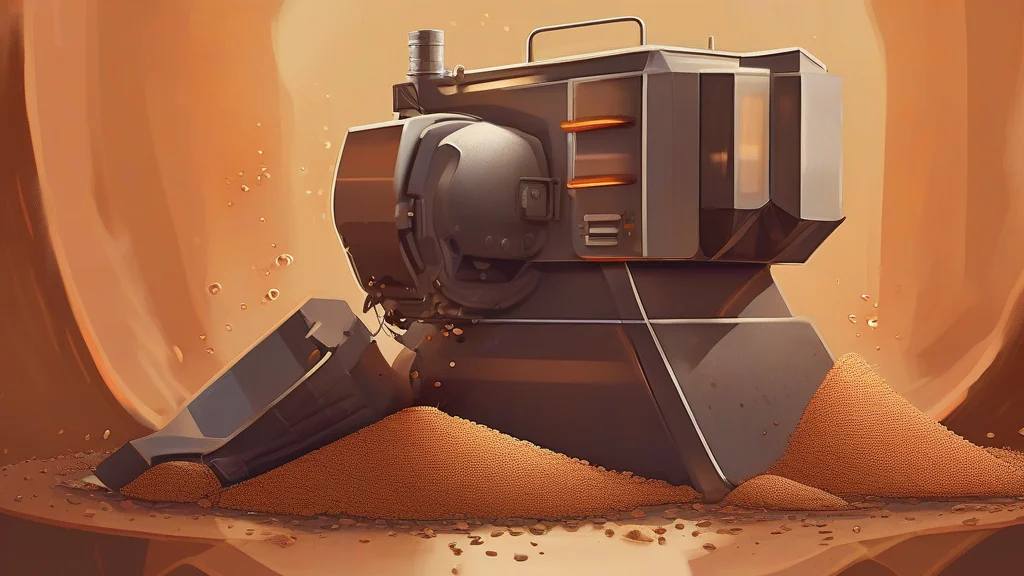
What does granulator mean?
A granulator is a noun naming equipment—or, less commonly, a worker—that processes material into small grains, granules, pellets, or similarly sized particles. It is especially common in plastics recycling, pharmaceutical manufacturing, food processing, feed production, and metallurgy. In a recycling plant, for example, a granulator may turn discarded plastic sheets into uniform pellets suitable for reprocessing; in tablet production, equipment of this kind can form drug granules before further processing. The word is technical and normally avoided in everyday conversation, where grinder, shredder, or mill may be used more generally, depending on the intended size and shape of the pieces. Those broader terms do not necessarily imply the production of distinct granules. Granulator is therefore useful when precision matters: it identifies equipment associated with controlled conversion into a granular form rather than merely crushing material into an undifferentiated mass.
nounA machine that processes material into small grains, granules, pellets, or similarly sized particles. The term can also denote a person or operator who performs the granulating process.
- A machine that processes material into granules, pellets, grains, or particles of a controlled size; occasionally, a person who operates such equipment.
"The plastic granulator turns waste sheets into reusable pellets."
"Waste plastic passes through a granulator before being molded into new products."
"The pharmaceutical company installed a granulator to produce uniform drug granules."
The standard plural for multiple machines or multiple people acting as granulators.
"Two granulators operate in the plastics recycling facility."
A granulator turns bulky material into small, uniform grains with a distinctly useful shape.
Reviewed by Deb Chak, Editor. AI-assisted content curated by RJS Tech Solutions LLP.
Where does granulator come from?
Granulator is an English agent-noun formed from granulate plus the suffix -or. Granulate derives from Latin granulum, a diminutive of granum, meaning “grain” or “seed,” and denotes forming something into grains or small particles. The same Latin root underlies granule, granular, and granulation.
How granulator is actually used
Primarily technical, especially in plastics recycling, pharmaceutical manufacturing, food processing, feed production, and metallurgy. Outside these settings, grinder or mill may be used more generally, though those terms do not necessarily imply the production of distinct granules.
Easily confused with granulator
A grinder generally reduces material to a fine or powdered state, whereas a granulator typically produces distinct grains, granules, or pellets of a controlled size.