
What does greenly mean?
Greenly is an English adverb that most naturally means “in a green manner,” often with a literary or poetic flavour: a hillside may glow, shimmer, or shine greenly in sunlight. In older usage, the adverb could describe a green or envious look, making it close to looking at something with jealousy; it could also mean immaturely or without experience. These senses are marked in modern reference works as archaic or obsolete rather than ordinary contemporary usage. The word is therefore useful chiefly for stylistic effect or for interpreting older literature, where it can convey colour, envy, or a lack of maturity in a compact form. Although the construction sounds old-fashioned today, its root and suffix remain transparent: “green” supplies the colour or figurative quality, while the suffix “-ly” turns the adjective into an adverb. A modern writer may choose “verdantly” as a more familiar literary alternative, but “greenly” can give a sentence a deliberately traditional, vivid, or period quality.
adverbIn a green manner or with a green colour. Archaically, with envy or an envious look; also, in older usage, immaturely or inexpertly.
- In a green colour or manner.
- With an envious or jealous look (archaic).
- In an immature or inexperienced manner (obsolete).
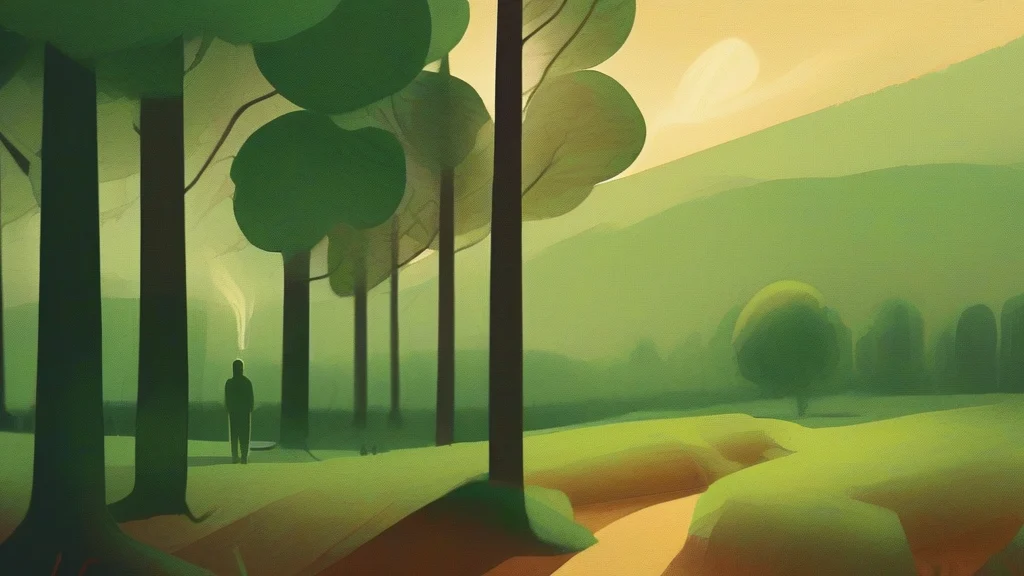
"The valley glowed greenly in the spring sunlight."
"The young trees shone greenly against the pale sky."
"She looked greenly at the display of his success."
Greenly is a literary time capsule: it can make a landscape glow today while recalling older meanings such as an envious glance or inexperienced behaviour.
Reviewed by Deb Chak, Editor. AI-assisted content curated by RJS Tech Solutions LLP.
Where does greenly come from?
Greenly is an English formation from green plus the productive adverbial suffix -ly. The base green descends from Old English grēne, while greenly itself is attested from the Middle English period. Historically, it could express green appearance, an envious manner, and the older figurative sense of being immature or inexperienced.
How greenly is actually used
Chiefly literary, poetic, or archaic in present-day English. The senses involving envy and inexperience are historical rather than part of ordinary modern usage, and the word is not restricted to either British or American English.