
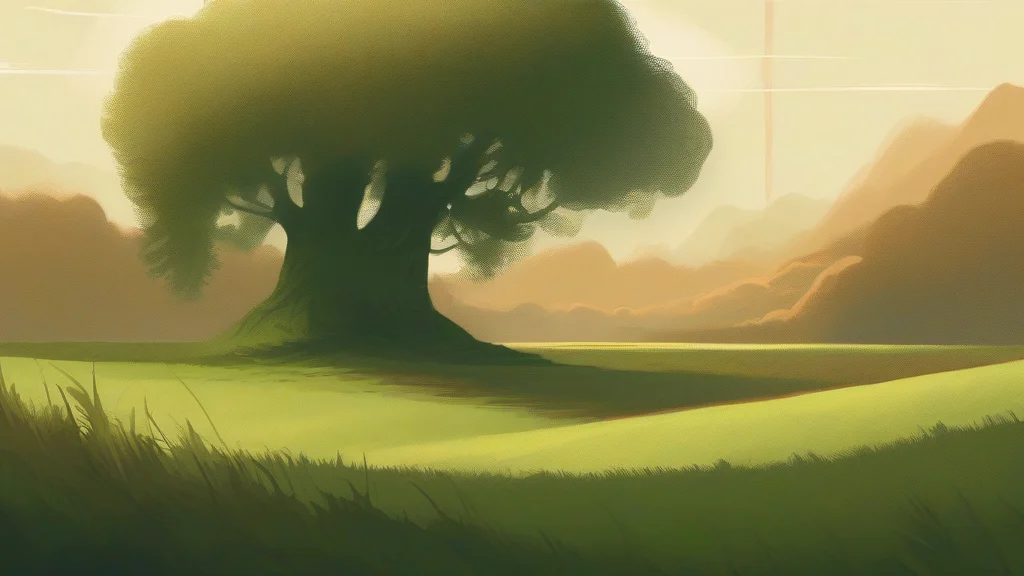
What does greensward mean?
Greensward is a literary noun meaning an area of grass, turf, or lawn, often with an emphasis on the pleasant green appearance of the ground. It appears in elevated prose and poetry, where its slightly old-fashioned sound contributes to descriptions of parks, estates, meadows, and other open landscapes. A writer might say that a house stands on the greensward or that a path crosses the sunlit greensward, language that gives ordinary grassland a picturesque, nostalgic quality. Although the word can be understood by modern readers, it is much less common than the straightforward words grass, turf, and lawn. Its interest lies partly in its history: it combines the familiar idea of green vegetation with the older English word sward, meaning a surface of grass or turf. The result is a memorable term for cultivated or naturally grassy ground, especially in a poetic or historical setting.
nounAn area of grass or green turf, especially a lawn or meadow. The word is now mainly found in poetic, archaic, or elevated prose.
- A stretch or area of green grass or turf, especially a lawn or meadow.
"They spread their picnic blanket upon the sunlit greensward."
"The old house stood upon a broad greensward surrounded by ancient trees."
"The choir sang beneath the trees, their voices carrying across the greensward."
The plural is possible but rare in modern usage; the singular is generally preferred even when referring to an expanse of grass.
"The estate had several greenswards bordered by hedges and old trees."
Greensward is where poetic English sends its lawnmowers to rest.
Reviewed by Deb Chak, Editor. AI-assisted content curated by RJS Tech Solutions LLP.
Where does greensward come from?
Greensward was formed in the late sixteenth century by combining green with sward, an older word for grass or turf. Its components have Germanic ancestry: green comes from Old English grēne, while sward comes from Old English sweard, related to forms for turf or grassy ground in other Germanic languages. The compound originally described green, grassy land and later became especially common in literary descriptions of lawns and open country.
How greensward is actually used
Greensward is literary and somewhat archaic rather than everyday. It often suggests a pleasant, open expanse of grass and appears especially in poetry, historical writing, and descriptions of landscapes or estates.