
What does grisette mean?
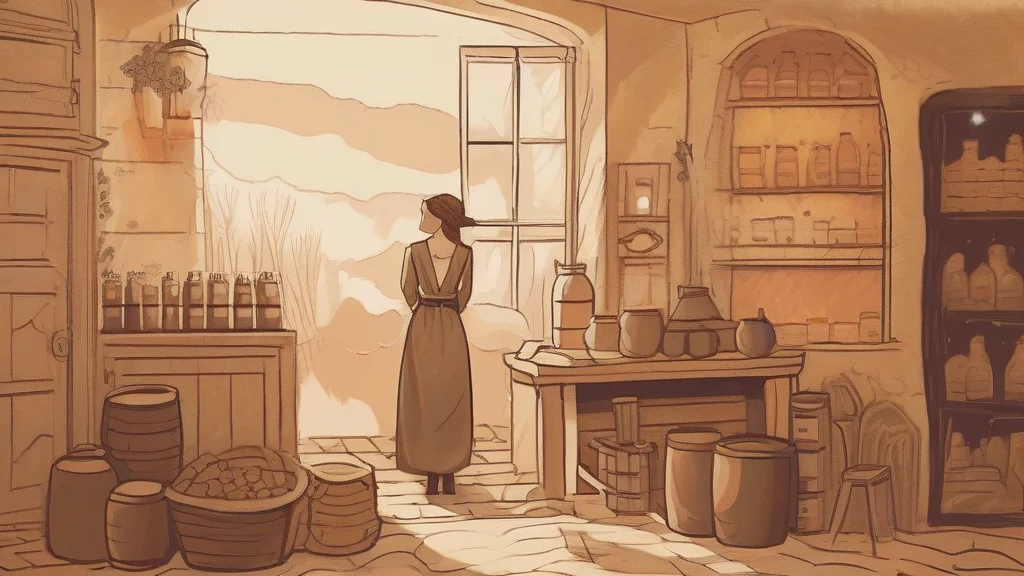
A grisette is, above all, a young working-class woman from France, especially Paris. In English literary and operatic usage, however, it often describes a stock character: a poor, independent young woman whose charm and social position can make her morally ambiguous. The term also refers, in older dictionary senses, to a grayish fabric and to a close-fitting cap associated with French women. Today the word is chiefly historical, literary, or deliberately nostalgic rather than a neutral description of any French woman. It carries both warmth and social stereotyping: a grisette may evoke Montmartre, café life, and the persuasive innocence of operatic heroines, but she is not simply a prostitute or an impoverished French speaker. Understanding the word therefore requires recognizing both its social history and its literary uses, making it useful for identifying a specifically French social and literary type rather than treating all young French women as interchangeable.
nounTraditionally, a young working-class French woman, especially one associated with Paris. In older English literary and operatic usage, a stock character of that type, often portrayed as innocent, flirtatious, or socially disreputable.
- A young working-class French woman, particularly one associated with Paris.
- A literary or theatrical stock character based on such a woman, often portrayed with an ambiguous or disreputable reputation.
- An obsolete grayish fabric, formerly made from silk or cotton.
- A close-fitting cap with a rounded top, originally associated with French women.
"The guide described her as the archetypal Parisian grisette, independent and always ready with a witty reply."
"The guide described her as the archetypal Parisian grisette, independent and always ready with a witty reply."
"The soprano's aria cast her as the ambitious grisette of nineteenth-century Paris."
The standard plural of the noun, used when referring to multiple working-class French women or literary characters of that type.
"The illustrator depicted two grisettes chatting outside a Montmartre café."
The name comes from French gris, meaning “gray,” after the gray cloth commonly worn by working women.
Reviewed by Deb Chak, Editor. AI-assisted content curated by RJS Tech Solutions LLP.
Where does grisette come from?
The English word borrowed French grisette, a diminutive of gris, meaning “gray.” The name referred to the gray cloth commonly worn by working-class women and subsequently became a social label. It entered English in the 18th century and spread through references to French songs, theatre, and literature.
How grisette is actually used
The word is chiefly historical, literary, theatrical, or nostalgic. It is not a neutral term for any young French woman and does not by itself mean prostitute, although fictional grisettes were sometimes portrayed as sexually available or associated with the demimonde.
Easily confused with grisette
Grissette is an alternative spelling of the same word; grisette is the standard modern English spelling.