
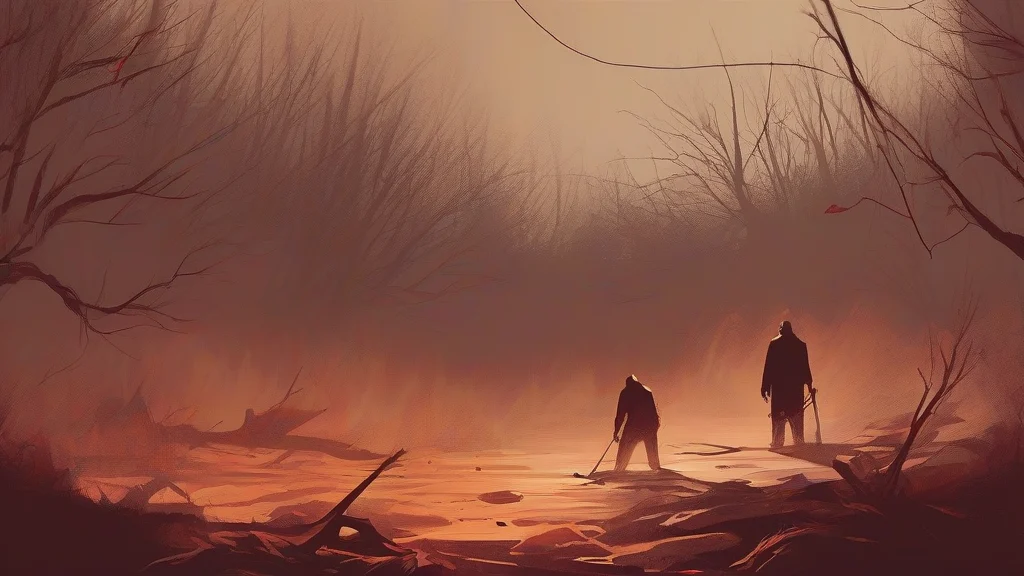
What does grisly mean?
Grisly is an adjective meaning extremely dreadful, frightening, or gruesome. It is used especially for scenes, events, injuries, and details that provoke fear or disgust, such as a grisly crime, grisly wounds, or the grisly remains of a disaster. The word has a vivid, often literary or narrative quality, making it well suited to descriptions of horror and violence, although it can also describe anything intensely unpleasant. In everyday use, grisly suggests more than ordinary ugliness or badness: it implies something horrifying, often because it shows the effects of death, injury, or violence. Although the pronunciation resembles that of grizzly, the two words have unrelated everyday meanings. Grisly is understood in British and American English and can be found across formal journalism, fiction, and everyday speech.
adjectiveCausing intense fear or dread; extremely dreadful, gruesome, or repellent. It is especially used to describe scenes, events, injuries, or details that are horrifying or disturbing.
- Causing intense fear, dread, or horror; dreadful or ghastly.
- So repellent or gruesome as to evoke strong disgust, often in descriptions of violence, injury, or death.
"The hikers found a grisly scene in the abandoned cabin."
"The police described the grisly scene in the warehouse."
"Her novel is filled with grisly details from the battlefield."
Grisly has the same hard /g/ and /z/ sounds as grizzly, but where grizzly can name a bear, grisly describes the kind of scene that makes you wish you had stayed home.
Reviewed by Deb Chak, Editor. AI-assisted content curated by RJS Tech Solutions LLP.
Where does grisly come from?
The word developed in English through an alteration of the older form grizeld, which had meanings such as “ugly” and “hideous.” Grizeld is generally associated with Old French grisle, “ugly,” although the ultimate origin of that form is uncertain. The modern spelling grisly became established in the late sixteenth century and eventually came to emphasize terror, horror, and the gruesome.
How grisly is actually used
Grisly is strongly negative and commonly describes something that is frightening, gruesome, or disturbing, especially because of its appearance or aftermath. It is used in both British and American English and is often more graphic or vivid than merely unpleasant.
Easily confused with grisly
Grizzly can refer to a North American bear or a dark gray-brown color, whereas grisly means dreadful, horrifying, or gruesome.