
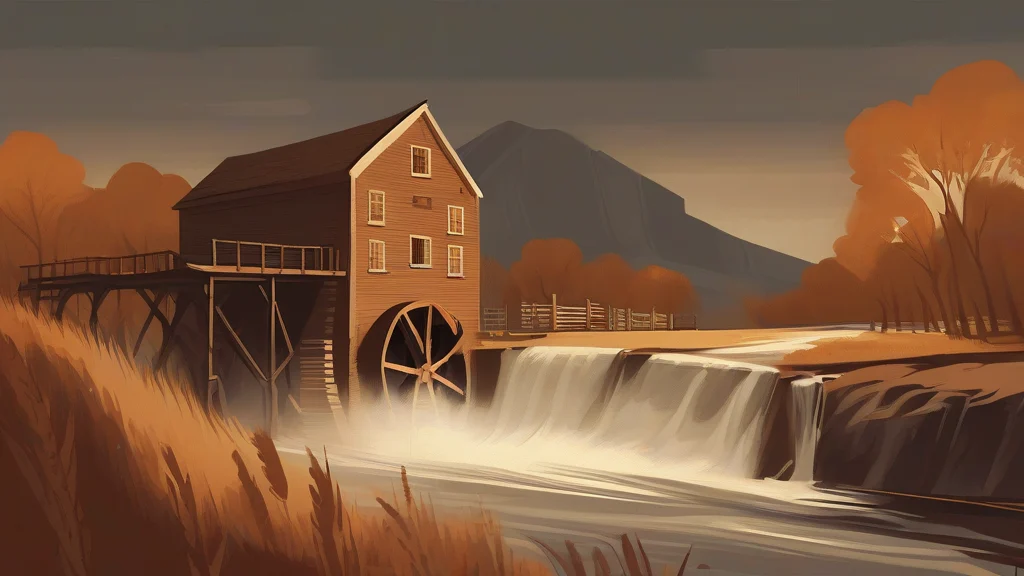
What does gristmill mean?
A gristmill is a mill in which grain is ground into flour, meal, or similar products. Its name combines “grist,” meaning grain to be ground, with “mill,” denoting the building or machinery that performs the milling. Gristmills historically depended on water power, animal power, or wind, and many survive today as preserved landmarks or operating heritage sites. The word is also used in modern descriptions of rural museums, historic properties, and traditional food production. Compared with the general word “mill,” “gristmill” identifies the machine specifically by its function of processing grain. Its associations with old buildings, local craftspeople, and long-standing communities give it a historical and occasionally nostalgic character, while the term remains precise and practical in agricultural and heritage contexts.
nounA mill for grinding grain, especially into flour or meal. The term is also commonly associated with traditional, historic, or water-powered mills.
- A mill or building where grain is ground into flour or meal.
"The old gristmill beside the creek still grinds corn for local bakers."
"A water-powered gristmill stands near the site of the old settlement."
"The museum operates a restored gristmill and demonstrates traditional grain milling."
The standard one-word plural is “gristmills”; the two-word form is pluralized as “grist mills.”
"Several gristmills operated along the river."
At a gristmill, the grist is what goes in—not what comes out.
Reviewed by Deb Chak, Editor. AI-assisted content curated by RJS Tech Solutions LLP.
Where does gristmill come from?
“Gristmill” is a compound of “grist,” meaning grain to be ground, and “mill.” The word “grist” is attested in Middle English for grain intended for milling and is generally traced to Old Norse ancestry, while “mill” comes through Middle English from Old English. The grinding-related root also underlies “grind” and related words such as “grinder” and “grindstone.”
Related word forms
How gristmill is actually used
The one-word spelling is common in American English, while the compound is also written as “grist mill,” especially in British usage. The word is especially associated with traditional, rural, and historic milling.
Easily confused with gristmill
A gristmill uses any suitable power source to grind grain, whereas a windmill is specifically powered by wind and may be used for other purposes such as pumping water.