
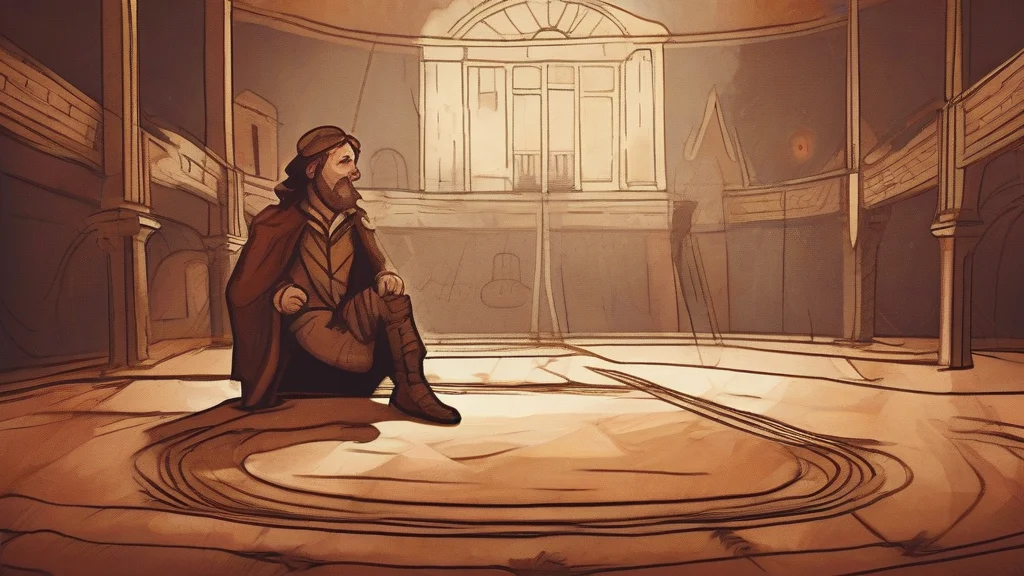
What does groundling mean?
A groundling originally referred to a spectator standing in the ground-level pit or yard of an early modern public theatre, often paying the lowest admission price. The word later became a disparaging term for someone considered unsophisticated, crude, or easily entertained by sensational or populist material. In modern use, it usually carries a strongly negative connotation and is often applied to members of an audience thought to respond uncritically to a performer, politician, or speaker. The expression is also frequently used in discussions of Shakespeare because groundlings occupied the cheapest part of the Globe theatre and could sit or stand close to the stage. Although 'groundling' can still describe a historical theatregoer neutrally, that technical sense is much less common than the figurative, insulting sense.
nounA groundling is, originally, a spectator who stood in the ground-level pit of an early modern public theatre. By extension and now usually disparagingly, it means a person regarded as crude, unsophisticated, or easily impressed.
- A person regarded as crude, unsophisticated, or easily impressed, especially an audience member thought to be receptive to crude or populist entertainment.
- Historically, a theatregoer who stood in the ground-level pit or yard of an early modern public theatre.
"The actor directed his satire at the groundlings, those eager spectators in the pit who lapped up every broad joke."
"His speech sounded like something designed to appeal to groundlings."
"At the Globe, groundlings paid a penny to stand in the yard and watch the actors from close range."
The standard plural is groundlings; in historical theatre contexts, it can refer collectively to spectators standing in the pit or yard.
"The groundlings waited for the performance to begin."
At Shakespeare’s Globe, groundlings paid the least and stood closest to the stage, making the name both practical and pointed.
Reviewed by Deb Chak, Editor. AI-assisted content curated by RJS Tech Solutions LLP.
Where does groundling come from?
The word dates from the early seventeenth century and was formed from 'ground' with the suffix '-ling', referring to a person occupying a low or ground-level position in a theatre. It originally denoted a spectator in the pit before acquiring the broader sense of an unsophisticated or undiscerning member of the audience. 'Ground' itself comes from Old English grond and is related to cognates such as Dutch grond and German Grund.
How groundling is actually used
Historically a neutral theatrical term, 'groundling' is now chiefly a derogatory label. It is rarely appropriate as a neutral synonym for 'audience member' and can express contempt for a person’s tastes or lack of sophistication.