
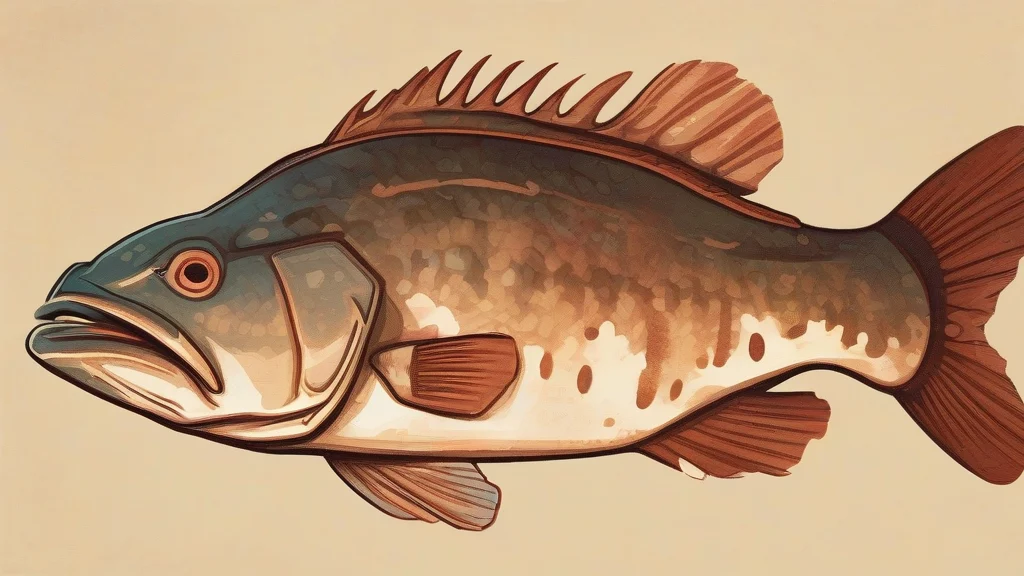
What does grouper mean?
Grouper chiefly names any of a large number of predatory marine fishes belonging to the family Serranidae. Found in tropical and subtropical waters, these fishes include the familiar red grouper and the exceptionally large goliath grouper. The name is common in seafood, restaurant, sporting, and wildlife contexts, where it may identify a particular species or the fish used as food more generally. Groupers are recognized by their robust bodies, large mouths, and carnivorous feeding habits. Less commonly and informally, a grouper is a person who associates with or attaches themselves to a group, especially an established one. This secondary sense can be approving, playful, or faintly critical depending on context. The word is worth knowing because it unites a globally familiar food and game fish with a much rarer social label, while its similarity to group, groupie, and sea bass can make its use less straightforward than it initially appears.
nounGrouper chiefly denotes any of various large, mostly predatory marine fishes of the family Serranidae, found in warm waters and valued as food. In informal use, it can also mean a person who associates closely with, or gravitates toward, an established group.
- Any of various large, mostly carnivorous marine fishes of the family Serranidae, especially the red and goliath groupers found in tropical and subtropical waters.
- Informally, a person who belongs to, seeks the company of, or consistently attaches themselves to an established social group.
"The restaurant served grilled grouper with lemon, garlic, and fresh herbs."
"The restaurant served grilled grouper with lemon, garlic, and fresh herbs."
"Her friends jokingly called her a grouper because she always attached herself to whichever group was largest."
The regular countable plural is groupers. The unmodified singular grouper is also widely used as a mass or seafood term, as in a pound of grouper.
"The market sells local groupers alongside several other reef fish."
The word has two almost unrelated lives: its main meaning is a major food fish, while a rare informal meaning describes someone drawn to a group.
Reviewed by Deb Chak, Editor. AI-assisted content curated by RJS Tech Solutions LLP.
Where does grouper come from?
The English fish name grouper dates from the early nineteenth century and was borrowed through Portuguese usage that reflected a Malay source. It entered English in a maritime and commercial context. Separately, the informal social meaning developed within English from group, in the same general family as groupie; the resemblance between the two strands of the word is therefore not evidence that the fish name was derived from English group.
How grouper is actually used
The fish sense is standard in British, American, and international seafood usage, although the precise species or market name may vary. The social sense is informal and uncommon and can sound dismissive in context.
Easily confused with grouper
A groupie is a devoted fan, often of a celebrity, whereas a grouper usually means a large marine fish.