
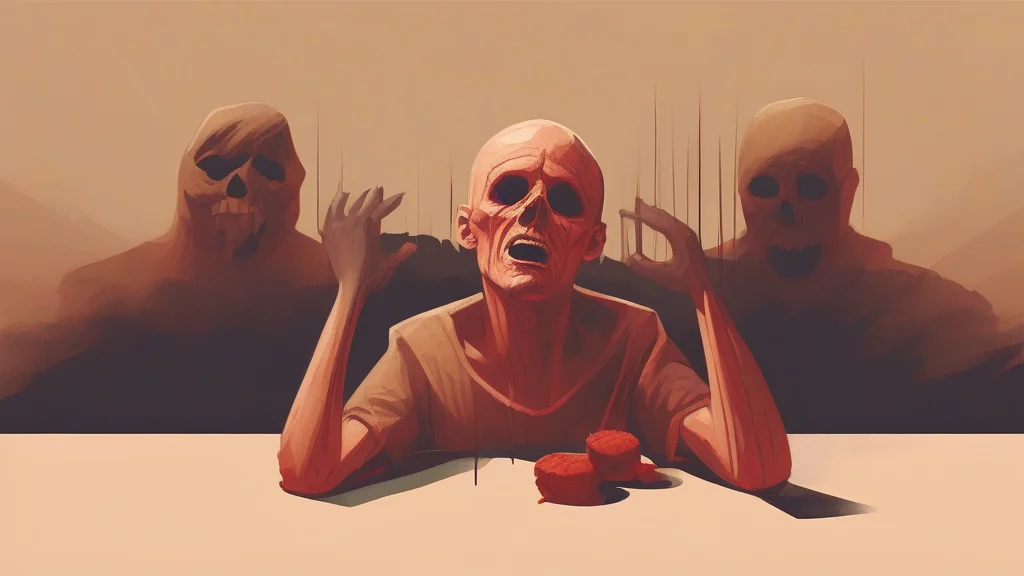
What does gruesomeness mean?
Gruesomeness is an abstract noun meaning extreme horribleness, dreadfulness, or grotesque ugliness. It usually describes something experienced as horrifying rather than merely unpleasant: a disaster may be called appalling, while the gruesomeness of a scene emphasizes its sickening or terrifying character. The word is especially associated with violent events, disturbing images, nightmares, and fictional depictions intended to horrify. Its force comes from the adjective gruesome, which conveys both visual ugliness and moral or emotional horror. Because gruesomeness is an uncountable quality rather than a discrete object, it is normally used without an article when naming a general property, as in “the sheer gruesomeness of the crime,” although the definite article is appropriate when referring to a particular manifestation of that quality. The term appears in formal reporting, literary criticism, reviews, and dramatic descriptions, but its intensity makes it less suitable for mild criticism.
nounThe quality of being gruesome; an intensely horrible, dreadful, or grotesque quality.
- The quality of being gruesome; horrible, dreadful, or grotesque character.
"Even years later, the sheer gruesomeness of the disaster haunted the survivors."
"The film was remembered less for its plot than for the的发 gruesomeness of its imagery."
"Witnesses struggled to describe the cold, utter gruesomeness of what they had seen."
Rare; the noun is normally treated as an uncountable quality and is not pluralized.
"The two stories explored different forms of gruesomenesses in the human imagination."
Gruesomeness captures the rare ability of something to be so horrifying that its ugliness feels almost unreal.
Reviewed by Deb Chak, Editor. AI-assisted content curated by RJS Tech Solutions LLP.
Where does gruesomeness come from?
Gruesomeness was formed in the early 17th century by adding the suffix -ness to gruesome. The adjective gruesome developed from the now-obsolete English word grue and was also influenced by grotesque, helping establish its sense of monstrous ugliness. The grue, gross, and gruff family ultimately belongs to a Germanic and Medieval Latin line associated with coarse or coarse-looking qualities.
Related word forms
How gruesomeness is actually used
The noun is strongly evaluative and emotionally intense. It is commonly used for scenes, events, depictions, or conditions that inspire horror or revulsion.
Easily confused with gruesomeness
Grossness chiefly means vulgarity or an excessive lack of refinement, whereas gruesomeness means horrible or dreadful ugliness.