
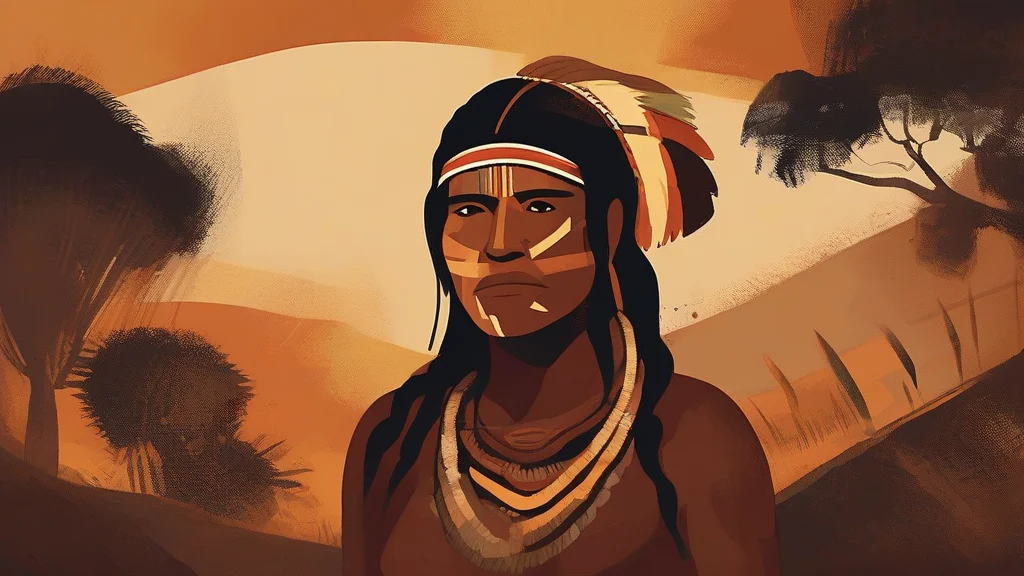
What does guarani mean?
Guarani is a proper noun with two closely related uses: it names a major Indigenous language of South America and the people traditionally associated with it. The language belongs to the Tupi-Guarani family and is spoken especially widely in Paraguay, as well as in parts of Argentina, Bolivia, and Brazil. Paraguay recognizes Guarani alongside Spanish as an official language, and many people use both languages in different social and public settings. Guarani also functions attributively, as in “Guarani language,” “Guarani people,” and “Guarani culture.” The term is more than a geographical label: it identifies a living linguistic and cultural tradition with a substantial literary, musical, and oral heritage. Guaraní, with an acute accent, is especially common in Spanish and is increasingly used in English for the people and the language, although the unaccented spelling “Guarani” is conventional in English. The deeper native etymology of the ethnonym remains uncertain and should not be reduced to an unsupported popular translation.
The Guarani language, or a member of the Guarani people.
"Guarani is taught in schools across Paraguay as a matter of national importance."
When referring to the people, “Guaranis” and the invariant plural “Guarani” are both used; the language itself has no plural.
Relating to the Guarani people, their language, or their culture.
"The song combines traditional Guarani rhythms with modern instrumentation."
The capitalized form is standard in English.
“Guaranis” is used as the regular plural when referring to individuals, while “Guarani” can also be used collectively or as an invariant plural. The name of the language does not take a plural.
"Guaranis from Paraguay and Argentina attended the cultural gathering."
Paraguay made Guarani an official language alongside Spanish in 1992, giving one of the world's most widely spoken Indigenous languages constitutional status at home.
Reviewed by Deb Chak, Editor. AI-assisted content curated by RJS Tech Solutions LLP.
Where does guarani come from?
The English word was borrowed through Spanish, where the people and their language are called Guaraní. The name is also the endonym traditionally used by the people themselves and is widely applied to the best-known member of the Tupi-Guarani language family. Related borrowing traditions include Portuguese guaraná for the yerba mate beverage and guarapo for a drink made from fruit or sugarcane. The precise internal origin of the Guaraní ethnonym is disputed, so claims that it directly mean a particular word such as “warrior” should be treated cautiously.
Related word forms
How guarani is actually used
Guarani is normally capitalized because it names a language and an Indigenous people. For the people, English commonly uses both the plural “Guaranis” and the collective or invariant plural “Guarani.”