
What does gull mean?
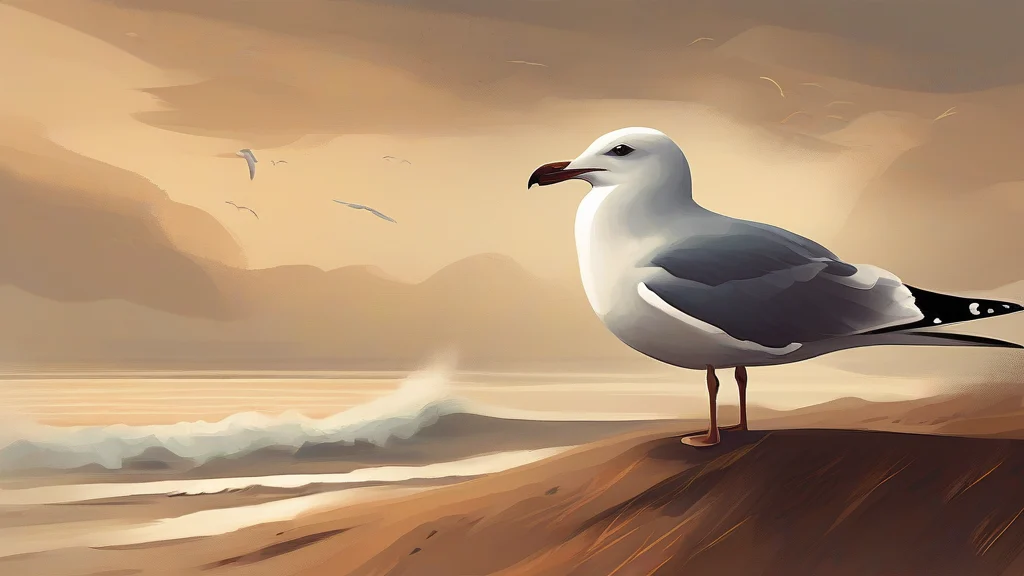
A gull is a familiar seabird with a harsh, distinctive call and typically white, grey, or black-and-white plumage. The word is especially associated with coasts, harbours, lakes, and other bodies of water, where gulls may gather in large colonies or follow fishing boats in search of food. In standard modern usage, “gull” most often refers to the bird, while “seagull” is a widely used alternative. The word also has an older figurative meaning: a gull is someone who is easily deceived, and “to gull” someone means to trick or deceive them. These figurative senses are now uncommon in everyday conversation but remain recognizable in literary, historical, and formal contexts. The contrast gives the word its particular interest: a gull is both a bold coastal bird and, in an older sense, a person who can be taken in by a deceptive story.
A long-winged seabird with typically white or grey plumage, living near the sea and often scavenging or feeding in groups.
"The gulls circled above the harbour, waiting for the fishermen to return."
The ordinary modern noun sense refers to the bird. “Seagull” is a very common alternative, especially in informal speech.
To deceive, trick, or impose upon someone.
"He was gullied by a convincing but false account of the investment."
This sense is dated or literary rather than common in everyday modern English.
The standard plural of the noun referring to the birds. The plural is also used as the third-person singular present form of the verb “to gull.”
"Two gulls landed beside the pier."
A gull is a seabird, while to gull someone is to deceive them—a surprisingly sharp contrast between a familiar bird and an old-fashioned verb.
Reviewed by Deb Chak, Editor. AI-assisted content curated by RJS Tech Solutions LLP.
Where does gull come from?
The English word comes through Old French gull, with the seabird sense recorded in Middle English and associated with Medieval Latin gallus. Its older figurative sense referred to a gullible or easily deceived person, and the verb meaning “to deceive” developed from that noun meaning. Modern related forms include gullible, gullibility, and gullery, the last denoting a colony or nesting place of gulls.
Related word forms
How gull is actually used
The noun meaning a seabird is common and neutral in British and American English. The noun meaning a gullible person is now dated and can sound dismissive or insulting. The verb is also chiefly dated or literary and is most natural in formal or historical contexts.