
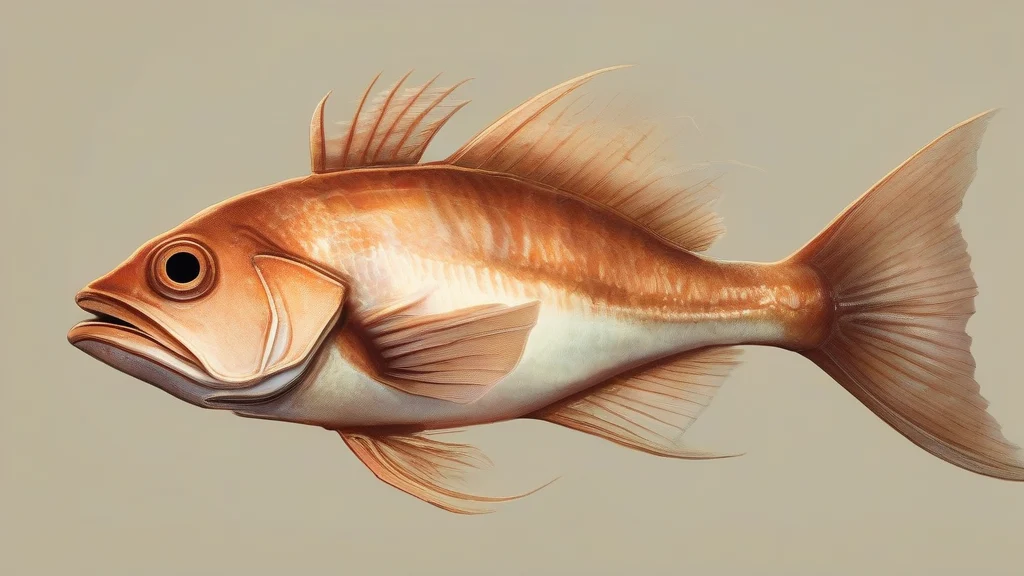
What does gurnard mean?
Gurnard has two established English senses. As a noun, it denotes a marine fish in the family Triglidae. These bottom-dwelling fishes have armored, spiny heads and large, fan-shaped pectoral fins, which they can spread over the sand while searching for prey. Their movements can appear to make them walk along the seabed. The term is used for species such as the grey gurnard, red gurnard, and yellow gurnard. As a verb, gurnard means to grimace or distort the face, particularly in response to something unpleasant or unwelcome. This verbal use is especially associated with informal British speech, though it is understandable elsewhere. The word is also easily confused in writing with gurnet, a different kind of fish. Gurnard is especially interesting because it joins a distinctive zoological meaning with a vivid facial expression, and because the fish's remarkable fins have inspired the widespread image of a sea creature walking across the ocean floor.
A marine fish of the family Triglidae, typically with an armored, spiny head and large pectoral fins used to move over and search the seafloor.
"Divers photographed a gurnard resting on a bed of sand."
The noun is standard in British and American English and is commonly used in species names such as grey gurnard and red gurnard.
To grimace or distort the face, especially with disgust, annoyance, or disapproval.
"She gurnarded at the offer and turned away."
Chiefly British and generally informal, playful, or mildly contemptuous.
The plural is used when referring to more than one fish of the kind.
"Several gurnards rested among the rocks near the seabed."
A gurnard can use its enormous fanlike fins to look like it is walking along the seabed while it hunts.
Reviewed by Deb Chak, Editor. AI-assisted content curated by RJS Tech Solutions LLP.
Where does gurnard come from?
The English word is recorded from the Middle English period and was borrowed from Old French forms related to gornard or gurnard. Its ultimate origin is uncertain, so claims for a precise source cannot be made confidently. The separate development of the fish name and the facial-expression verb may reflect older associations involving snorting, grunting, or a distorted mouth.
Related word forms
How gurnard is actually used
The noun is standard in British and American English. The verb is chiefly British and is usually informal or playful; it is considerably less common in American English.
Easily confused with gurnard
A gurnard is a bottom-dwelling fish with large pectoral fins, whereas a gurnet is a mackerel-like fish of the genus Scomberomorus.