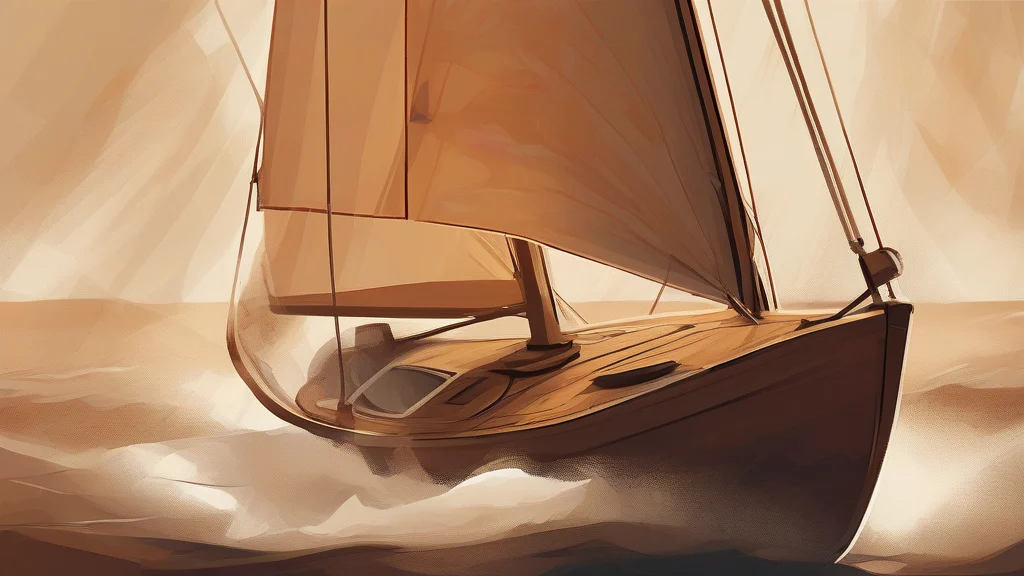
What does gybe mean?
A gybe is a sailing maneuver that involves turning the bow or stern of a sailboat through the wind. It is a crucial skill for sailors to master, as it allows them to adjust their course and catch the wind on the other side. The term 'gybe' is derived from the nautical term 'yip,' which refers to the sound of the wind in the sails. In modern usage, the term 'gybe' is used in both British and American English, and is commonly used in sailing contexts. The verb 'gybe' can be used in a variety of tenses, including the present, past, and past perfect. For example, 'The sailor gybed the sailboat to catch the wind on the other side,' 'The sailboat gybed sharply,' and 'The sailor had gybed the sailboat before.' The term 'gybe' is often used in conjunction with other sailing terms, such as 'tack' and 'jibe.' In addition to its nautical usage, the term 'gybe' can also be used in a figurative sense to refer to a sudden change in direction or a sharp turn. For example, 'The company gybed its marketing strategy to focus on social media.' Overall, the term 'gybe' is an essential part of the sailing vocabulary, and is used by sailors and sailing enthusiasts around the world.
verbTo turn the bow of a sailboat through the wind so that the sails luff, or to turn the stern of a sailboat through the wind so that the sails backwind.
- To turn the bow of a sailboat through the wind so that the sails luff.
- To turn the stern of a sailboat through the wind so that the sails backwind.
"The sailor expertly gybed the sailboat to catch the wind on the other side."
"The sailor expertly gybed the sailboat to catch the wind on the other side."
"The sailboat gybed sharply, causing the crew to lose their balance."
The plural form 'gybes' is used to refer to multiple instances of the sailing maneuver.
"The sailor performed several gybes to adjust the sailboat's course."
Reviewed by Deb Chak, Editor. AI-assisted content curated by RJS Tech Solutions LLP.
Etymology of gybe
The term 'gybe' is derived from the nautical term 'yip,' which refers to the sound of the wind in the sails. The term 'yip' is thought to have originated in the 17th century, when sailors used the term to describe the sound of the wind in the sails. Over time, the term 'yip' evolved into 'gybe,' which is now used to describe the sailing maneuver. The term 'gybe' is also related to the term 'yippee,' which is a colloquialism used to express excitement or enthusiasm. In addition, the term 'gybe' is cognate with the term 'yippee-ki-yay,' which is a phrase used to express excitement or enthusiasm.
How gybe is actually used
In sailing, a gybe is a maneuver that involves turning the bow or stern of the sailboat through the wind. It is an essential skill for sailors to master, as it allows them to adjust their course and catch the wind on the other side.