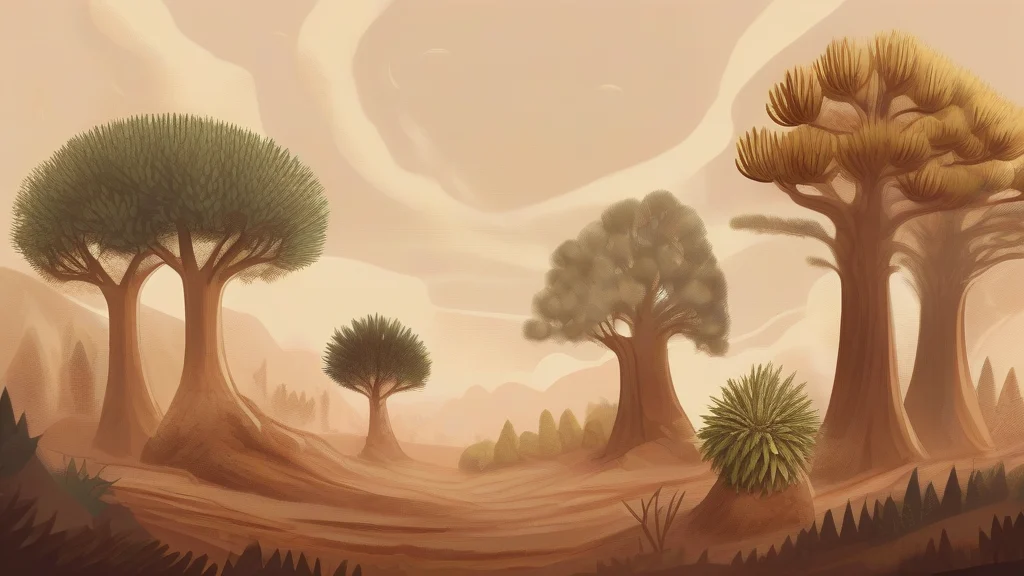
What does gymnosperm mean?
A gymnosperm is a type of plant that produces seeds but does not produce flowers or fruits. This group includes conifers such as pine and spruce trees, as well as cycads and ginkgos. Gymnosperms are often found in cooler climates and are typically characterized by their needle-like leaves and cones. They play a crucial role in many ecosystems, providing food and habitat for a variety of animals. The term 'gymnosperm' is derived from the Greek words 'gymnos' meaning naked and 'sperma' meaning seed, referring to the fact that gymnosperms produce seeds that are not enclosed in an ovary or fruit.
nounA gymnosperm is a type of plant that produces seeds but does not produce flowers or fruits. Examples include conifers, cycads, and ginkgos.
- A plant that produces seeds but not flowers or fruits.
- A member of the division Gymnospermae, which includes conifers, cycads, and ginkgos.
"The pine tree is a common example of a gymnosperm."
"The forest was dominated by gymnosperms such as pine and spruce."
"Gymnosperms are often found in cooler climates."
The plural form is used to refer to multiple types of gymnosperms or a collection of gymnosperm plants.
"The forest was dominated by gymnosperms such as pine and spruce."
Reviewed by Deb Chak, Editor. AI-assisted content curated by RJS Tech Solutions LLP.
Etymology of gymnosperm
The word 'gymnosperm' comes from the Greek words 'gymnos' (γυμνός) meaning 'naked' and 'sperma' (σπέρμα) meaning 'seed'. This refers to the fact that gymnosperms produce seeds that are not enclosed in an ovary or fruit. The term has been used in botany since the 19th century to describe this group of plants.
How gymnosperm is actually used
The term 'gymnosperm' is primarily used in botany and plant biology.