
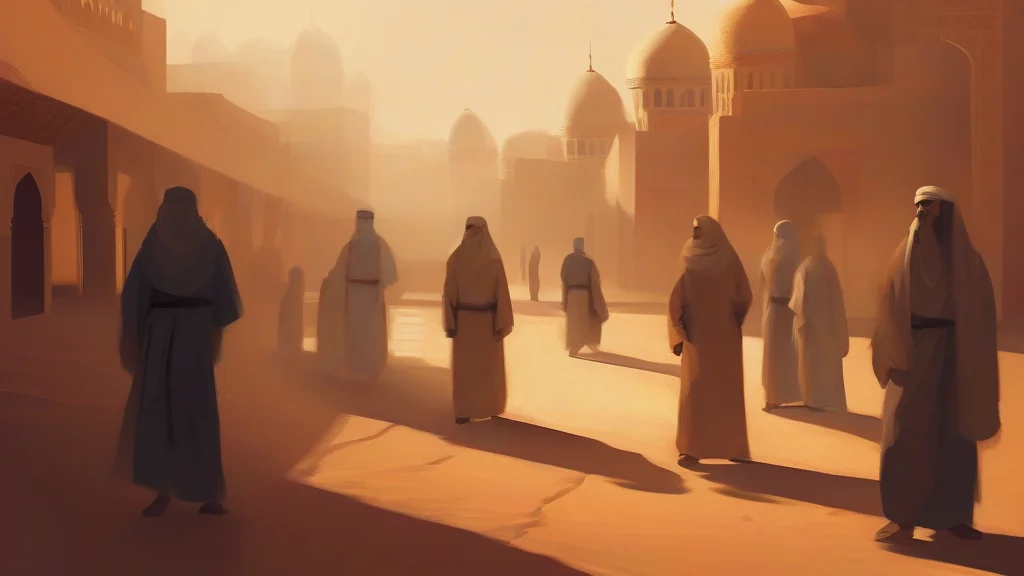
What does hadji mean?
Hadji is a noun for a Muslim who has completed the hajj, the pilgrimage to Mecca. It is more specific than the general word pilgrim because it identifies a journey made in accordance with Islamic religious practice. The word comes from Arabic ḥājjī, an active participle meaning one who has gone on pilgrimage, and was borrowed into English during the early modern period. Although hadji once appeared naturally in European travel writing, historical accounts, and descriptions of Islamic devotion, it is now chiefly a dated or regional English form. Contemporary English normally uses hajji for the person and hajj for the pilgrimage itself, while haji is also common in some communities. Hadji carries no inherent derogatory meaning and can be used respectfully in historical or cultural contexts. Its distinctive spelling nevertheless makes it useful for understanding older texts and for tracing the vocabulary of pilgrimage and Islamic history.
nounA Muslim who has made the pilgrimage to Mecca known as the hajj.
- A Muslim who has completed the pilgrimage to Mecca known as the hajj.
"In the account, the hadji described the hardships of the road to Mecca."
"In the old letter, the writer described himself as a hadji returning from Mecca."
"The historian examined photographs of hadjis taken during the early twentieth century."
The regular plural is rare because hadji is now largely a historical or regional form.
"The archive contains photographs of several hadjis who lived in the port city."
Hadji preserves an older English transliteration of Arabic ḥājjī, the same root still visible in today's hajj and hajji.
Reviewed by Deb Chak, Editor. AI-assisted content curated by RJS Tech Solutions LLP.
Where does hadji come from?
Hadji derives from Arabic ḥājjī, the active participle of ḥajja, meaning “to go on pilgrimage,” and denotes someone who has performed the pilgrimage to Mecca. English borrowed the form during the early modern period, alongside closely related forms such as hajji, while hajj became the usual English name for the pilgrimage itself. All these forms reflect the same Arabic root ḥ-j-j.
Related word forms
How hadji is actually used
Hadji is now chiefly a dated English spelling and may sound historical or regional. In contemporary religious and community contexts, hajji or haji is generally preferred.
Easily confused with hadji
Hajji is the more common modern English spelling for a Muslim who has completed the hajj, whereas hadji is an older English spelling of the same word.
Haji is a widely used informal or community spelling, especially in South Asian and Muslim usage, while hadji reflects a more traditional English transliteration.