
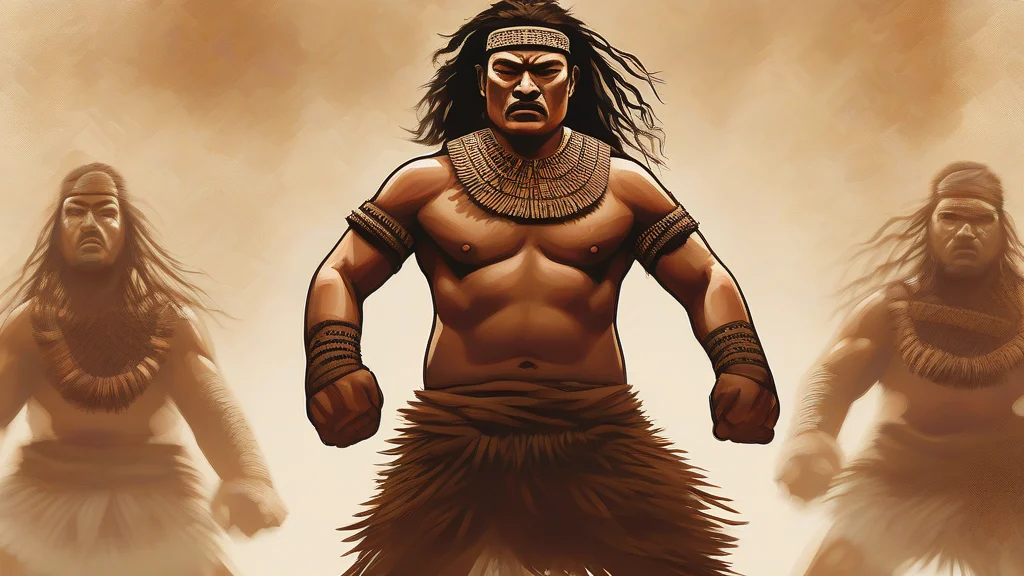
What does haka mean?
The haka is a Māori ceremonial dance and rhythmic performance characterized by forceful movement, chanting, and expressive gestures. In its traditional cultural setting, it can express welcome, grief, resolve, or respect; in contemporary public use, a haka is also performed as a forceful challenge or a display of collective identity, especially by sports teams. Although the haka was historically associated with war, its meaning is broader than fighting today. The term is usually pronounced HA-ka and remains closely associated with Māori language and culture. Speakers should use it with awareness that the haka is a specific cultural practice, not a generic label for loud group chanting. The word is now familiar internationally through coverage of New Zealand and international sport, but its Māori origins and ritual context remain central to its meaning.
nounA traditional Māori ceremonial dance or performance involving vigorous movement, rhythmic chanting, and expressive gestures. It may be performed ceremonially or as a challenge and display of group identity.
- A traditional Māori ceremonial dance involving vigorous movement, chanting, and expressive gestures.
- A performance of the haka used as a challenge, welcome, or display of group identity.
"The team performed a powerful haka before its championship match."
"Visitors were welcomed with a haka performed by the local iwi."
"The rugby team performed its haka in front of an roaring stadium crowd."
Use hakas for separate performances; a haka may also function collectively for the dance or performance itself.
"The two groups performed contrasting hakas before the final."
The haka transforms synchronized chanting, forceful movement, and fierce expressions into a powerful statement of collective identity.
Reviewed by Deb Chak, Editor. AI-assisted content curated by RJS Tech Solutions LLP.
Where does haka come from?
The English word is borrowed from Māori haka, a term for a dance or vigorous postural performance. Cognate forms occur in Hawaiian, Tongan, and Rapa Nui, with meanings ranging from dance to forceful taking or seizing. The English borrowing came to refer to the Māori ceremonial dance and, by extension, to challenge performances associated especially with team sport.
How haka is actually used
The term refers to a specific Māori cultural practice and should be used with awareness of its origins. It is not a general synonym for any loud group chant or celebration, and its use by non-Māori groups has sometimes been criticized as cultural appropriation.
Easily confused with haka
A shaka is a hand gesture with the thumb and little finger extended, whereas a haka is a group dance or ceremonial performance.
Hakka can refer to a Chinese ethnic group or its cuisine, while haka is the Māori ceremonial dance.