
What does hammerer mean?
Hammerer is an uncommon English noun with several related uses. Its basic sense is a person who hammers, particularly someone whose work involves a hammer; in historical and occupational contexts, it can describe a metalworker or forge worker. By extension, a hammerer may also be a machine or tool that delivers repeated blows. In baseball, the word is informal but established for a powerful batter, especially one known for hitting home runs. The term is therefore more specific than the neutral words worker or player, while its rarity and occupational associations can make it sound traditional or even historical in ordinary prose. Modern usage is most likely to be found in baseball commentary, descriptions of machinery, historical writing, or discussions of skilled manual work.
nounA hammerer is a person who hammers or works with a hammer, especially as an occupational designation. By extension, it can denote a tool or machine that delivers hammering blows; in baseball, it can mean a powerful batter who hits home runs.
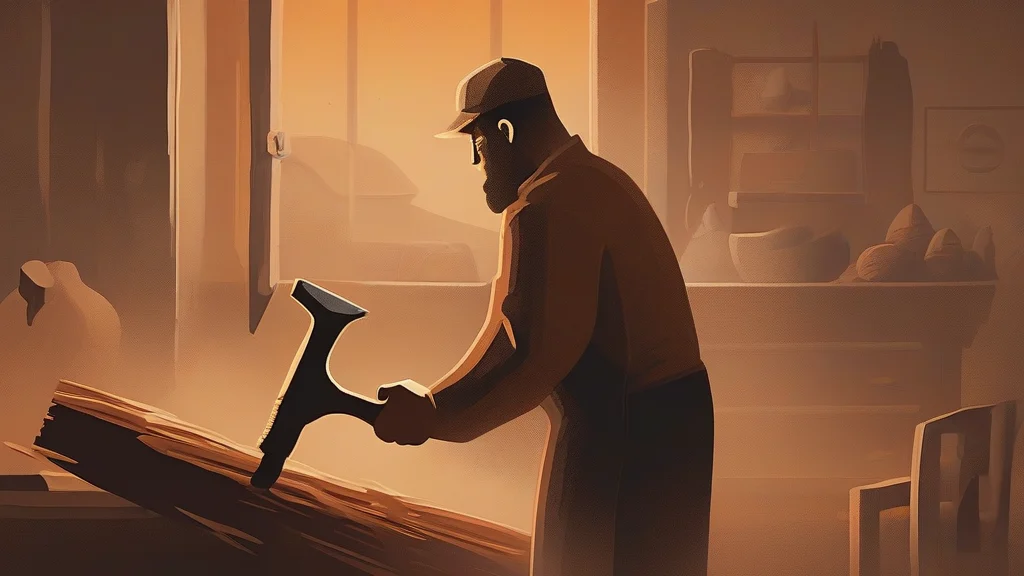
- A person who hammers or whose occupation involves using a hammer.
- In baseball, a powerful batter, especially one known for hitting home runs.
- A tool or machine designed to deliver hammering blows.
"After hitting two home runs, the rookie was suddenly the team's most talked-about hammerer."
"After hitting two home runs, the rookie was suddenly the team's most talked-about hammerer."
"The historical painting depicts a hammerer working a piece of hot iron in a village forge."
The plural is regular. In the occupational sense, it is less common today than alternatives such as smiths or workers.
"The forge employed several experienced hammerers."
A hammerer may be a person at work—or a machine built to strike: the word turns the action of hammering into a worker.
Reviewed by Deb Chak, Editor. AI-assisted content curated by RJS Tech Solutions LLP.
Where does hammerer come from?
Hammerer is an English agent and tool noun formed from hammer with the productive suffix -er, which can indicate either a person who performs an action or a device that performs it. Hammer comes from Old English hamor and is generally traced to Proto-Germanic *hamaraz, with related forms in Old Norse hamarr and Old High German hamar. English compounds such as hammerman and hammersmith preserve the same occupational root while identifying related kinds of metalworking work.
How hammerer is actually used
The occupational sense is uncommon outside historical, traditional, or manufacturing contexts and can sound dated. The baseball sense is informal but established, while the sense for a mechanical hammering device is relatively technical.