
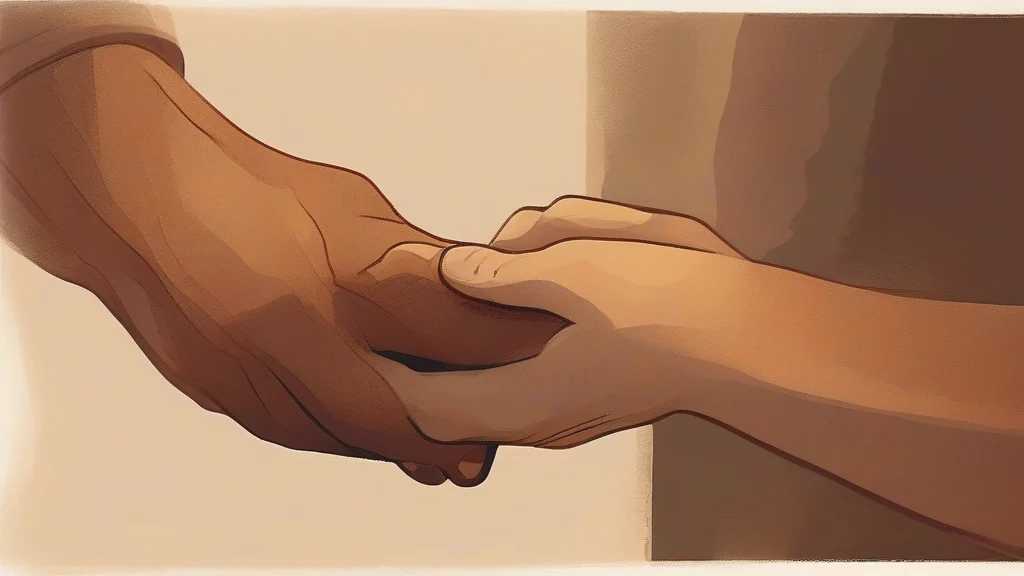
What does handclasp mean?
Handclasp denotes the act or result of two people taking and holding one another's hands, usually in greeting, agreement, or affection. It is less common than handshake and often carries a more deliberate, old-fashioned, or literary tone, so it appears readily in descriptions of formal welcomes, reconciliations, and old-fashioned courtship. As a noun, a handclasp is the grip itself or the act of clasping hands; as a verb, handclasp means to clasp someone's hands. The word is especially useful when a writer wants to emphasize the physical act of joining hands rather than the broader social ritual represented by a handshake. It can suggest sincerity, warmth, trust, or solemn agreement, although those implications come from context rather than from a fixed dictionary meaning. Handclasps are often exchanged briefly, but the expression can also evoke extended contact, making it useful in literary or descriptive writing. In everyday conversation, handshake is normally the natural choice.
A mutual grasp or clasp of hands, especially as a greeting or as a token of affection, goodwill, or agreement.
"A formal handclasp marked the end of the negotiations."
Somewhat literary or old-fashioned; handshake is the usual neutral everyday term.
To clasp or hold hands with someone, typically as a greeting or expression of agreement.
"The old friends reached out and handclasped."
Literary or archaic, and used chiefly in narrative descriptions.
The plural is used when referring to several separate acts or instances of clasping hands.
"The ceremony concluded with brief handclasps and nods across the table."
Two hands, one promise: the handclasp puts agreement or affection into a grip you can see.
Reviewed by Deb Chak, Editor. AI-assisted content curated by RJS Tech Solutions LLP.
Where does handclasp come from?
Handclasp is an English compound formed from hand and clasp. Hand descends from Old English hand and has close cognates in German and Dutch. Clasp came through Middle English from an Old English verb meaning to grasp or hold fast; the compound's specific date of formation is uncertain.
Related word forms
How handclasp is actually used
The noun is somewhat literary or old-fashioned, although it remains understandable in British and American English. The verb is literary or archaic and is chiefly used in narrative descriptions. In neutral everyday speech, handshake is normally preferred.
Easily confused with handclasp
A handshake is the customary greeting or agreement ritual as a whole, whereas a handclasp emphasizes the grasp or holding of one person's hands.