
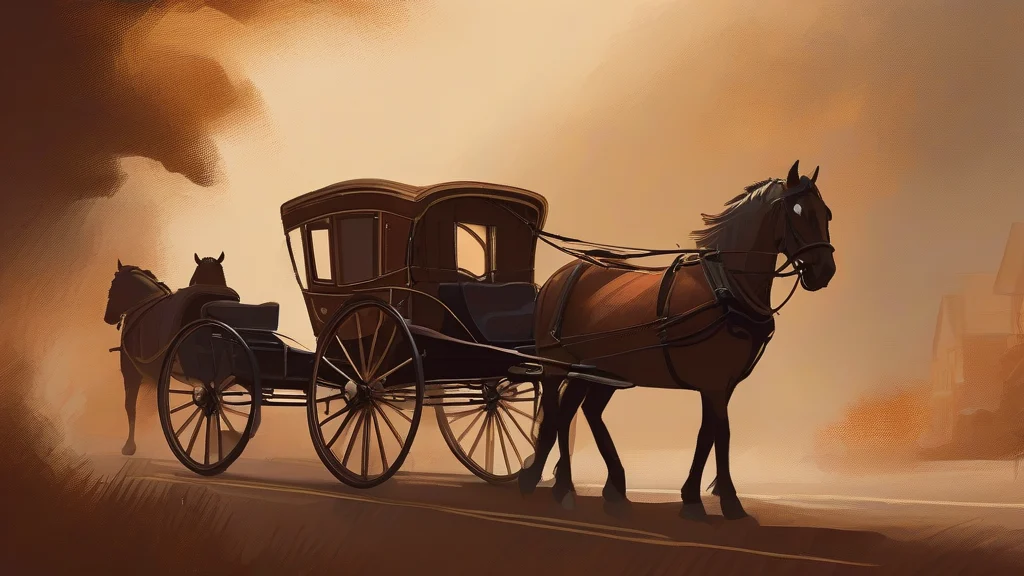
What does hansom mean?
A hansom is a compact, two-wheeled horse-drawn carriage that carried two passengers, with the driver seated behind them. It was developed in 1830s Britain and became one of the most recognizable vehicles of the Victorian era, particularly on the busy streets of London. Its low, maneuverable design made it easier to navigate crowded urban roads, and hansoms were widely used by professionals, tourists, and people hiring private transportation. The term is now chiefly historical or literary, though it remains familiar because of its distinctive appearance and association with nineteenth-century city life. Although “hansom cab” is a traditional and fully established expression, the shorter word “hansom” is also common when the meaning of carriage is already clear. In modern writing, the word usually suggests elegance, speed, and an unmistakably Victorian setting rather than ordinary contemporary transportation.
nounA hansom is a light, two-wheeled horse-drawn carriage with seats for two passengers, popular in cities during the 19th century. The driver sat behind the passengers, and the vehicle became especially associated with Victorian London.
- A light, two-wheeled horse-drawn carriage for two passengers, with the driver seated behind the passenger compartment.
"They crossed the city in a hansom, rattling over the cobbled streets."
"A hansom waited outside the hotel, its driver muffled against the winter rain."
"The novel describes an affluent couple traveling through London by hansom."
The standard plural is “hansoms.”
"Several hansoms waited beside the crowded railway station."
Before taxis crowded the streets, a hansom offered Londoners a startlingly modern ride: a compact carriage that could turn in surprisingly tight circles.
Reviewed by Deb Chak, Editor. AI-assisted content curated by RJS Tech Solutions LLP.
Where does hansom come from?
The word is an eponym derived from the surname of Joseph Aloysius Hansom, an English carriage designer whose patented vehicle appeared in the 1830s. His design became so widely recognized that his surname came to stand for this particular type of carriage. The name developed through the specific combination “Hansom cab” before the shorter form became established.
How hansom is actually used
The word is chiefly historical and literary today. It is especially associated with 19th-century Britain and with the streets of Victorian London, although hansoms also operated in the United States and elsewhere.
Easily confused with hansom
A hansom has two wheels and places its driver behind the passenger compartment, whereas a brougham is a four-wheeled carriage driven from a separate front seat.