
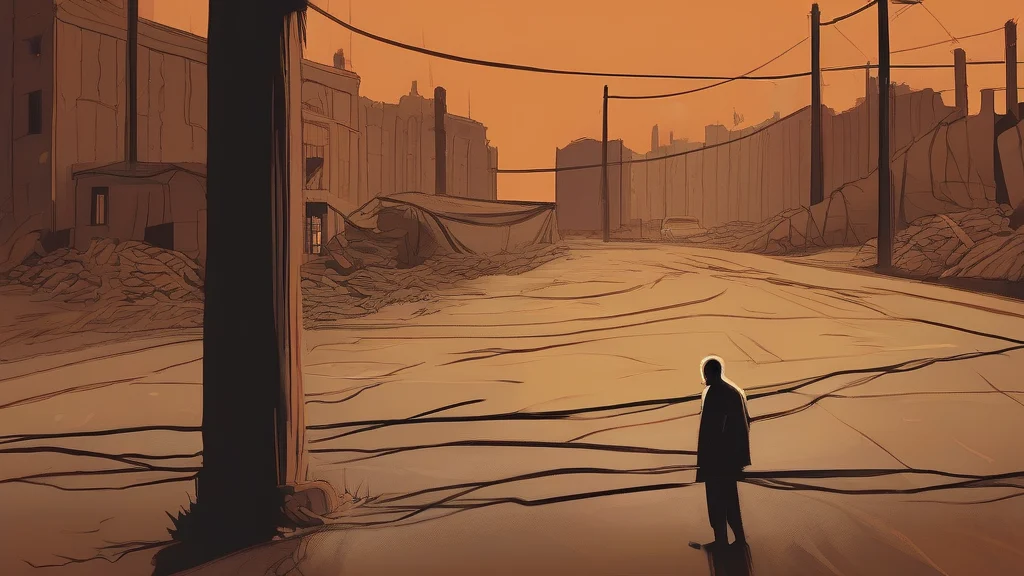
What does haplessness mean?
Haplessness is an uncommon, literary noun meaning the condition of being without good fortune or of being unhappy because of unfortunate circumstances. Unlike helplessness, it focuses on adversity and lack of luck rather than an inability to act. The word can describe a person's condition, as in “her sense of haplessness,” or a broader atmosphere of desolation and resignation. Its elevated tone makes it more common in literary criticism, historical narrative, and formal reflection than in everyday conversation, where “unhappiness” or “misfortune” is usually preferred. Although rarely encountered, haplessness is a precise and evocative word: it gives a name not only to sadness but also to the particular quality of being affected by unfavorable chances. Derived from hapless, whose “hap” once meant chance or luck, it also preserves a glimpse of older English vocabulary. The word is especially useful when writing about fate, contingency, and the emotional effects of circumstances beyond one's control.
nounThe state of being unfortunate, unhappy, or without good fortune. It may describe a person's condition or the character of a situation.
- The state of being unhappy, unfortunate, or without good fortune.
"The stranded travelers watched the storm with a resignation born of haplessness."
"The stranded travelers watched the storm with a resignation born of haplessness."
"Critics saw in the bleak landscape a reflection of the hero's deepening haplessness."
Rare. Haplessness is normally an abstract mass noun, but the plural can distinguish separate instances or kinds of misfortune.
"The novel contrasts different haplessnesses: exile, bereavement, and the slow collapse of a once-prosperous family."
Haplessness hides a piece of its own history: it contains “hap,” an old English word for chance or luck.
Reviewed by Deb Chak, Editor. AI-assisted content curated by RJS Tech Solutions LLP.
Etymology of haplessness
Haplessness was formed in English by adding the suffix -ness to hapless. Hapless combines hap, an Old English noun meaning “chance, fortune, or luck,” with the suffix -less and is attested in Middle English. The same older root underlies words such as happy and happen, whose later meanings developed from associations with chance, luck, and fortune.
How haplessness is actually used
This is an uncommon, literary word. It is more usual in formal prose, historical writing, and literary criticism than in everyday conversation, where “unhappiness” or “misfortune” is often preferred.
Easily confused with haplessness
Haplessness emphasizes misfortune or lack of good fortune, whereas helplessness means the inability to act or help oneself.