
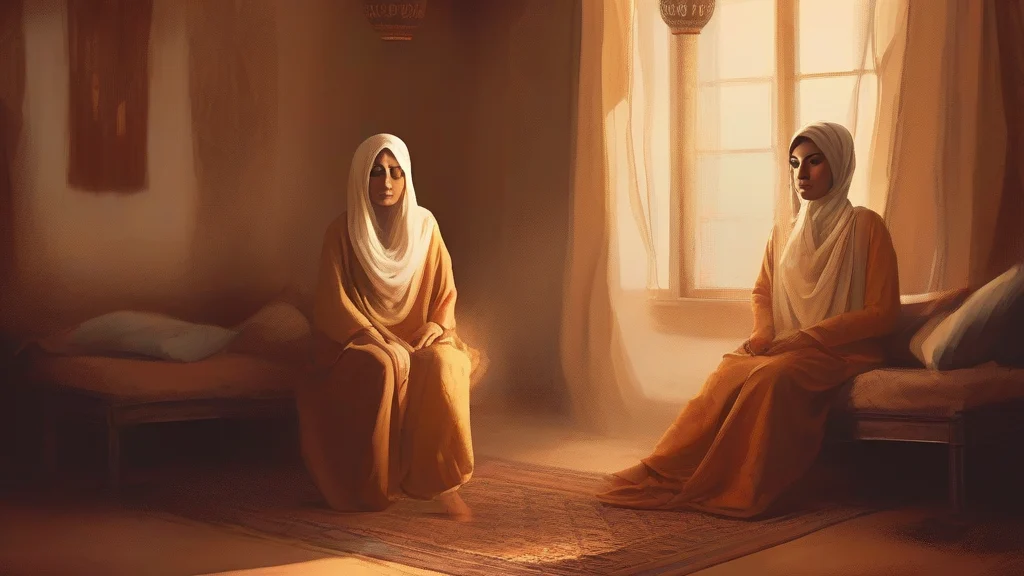
What does harem mean?
A harem is, in its historical sense, the women living in separate quarters of a traditionally Muslim household, especially a ruler's wives, concubines, daughters, and other female relatives or attendants. The word can also refer more generally to a group of women attached to or sexually available to one man, including in figurative descriptions of powerful men surrounded by female admirers. In British and American usage, harem is a countable noun, with the plural harem or harems. Historically, harems could be centers of family life, political influence, and administration as well as places of confinement, so descriptions of them as merely secret or sexual quarters are reductive. The term is often used today in discussions of the Ottoman and other Middle Eastern past, and in figurative or humorous contexts about a man with many female fans. Because it carries associations of gender, power, and exclusion, it is best applied carefully and with historical context.
nounThe women, especially wives, concubines, and female relatives or attendants, who lived in the private quarters of a traditionally Muslim household. By extension, a group of women associated with one man as wives or sexual partners.
- The women, especially wives, concubines, and female relatives or attendants, occupying separate quarters in a traditionally Muslim household.
- A group of women associated with one man as wives or sexual partners, especially in figurative use.
"The novel portrays life in the sultan's harem as a world of rivalry, intrigue, and political influence."
"The novel portrays life in the sultan's harem as a world of rivalry, intrigue, and political influence."
"The article discusses the polygynous harem as a site of both political power and restriction."
Harems is the usual plural in contemporary British English; harem is also accepted as a plural, especially in American usage.
"Travel accounts often portrayed the Ottoman sultan's harems as exotic spaces of intrigue."
Harem entered English through Turkish from Arabic ḥarīm, meaning “forbidden” or “sacred enclosure”—a compact history of the Ottoman world.
Reviewed by Deb Chak, Editor. AI-assisted content curated by RJS Tech Solutions LLP.
Where does harem come from?
The English word entered through Turkish harem, ultimately from Arabic ḥarīm, meaning “forbidden” and by extension a “sanctuary” or “sacred enclosure.” In Ottoman Turkish it designated the private women's quarters of a household. English borrowed the term in the late 16th or early 17th century, initially in accounts of Ottoman households.
How harem is actually used
Harem is standard in British and American English, but modern historical discussion should avoid reducing harems to images of passive or secluded women. In figurative use, the term is often humorous or dismissive and may imply powerlessness or sexual objectification.
Easily confused with harem
A haram is something prohibited under Islamic law, whereas a harem is a household group of women or the private quarters associated with them.
Harm means injury, damage, or misfortune; harem is a historical household institution and has no inherent connection to damage.