
What does harmonica mean?
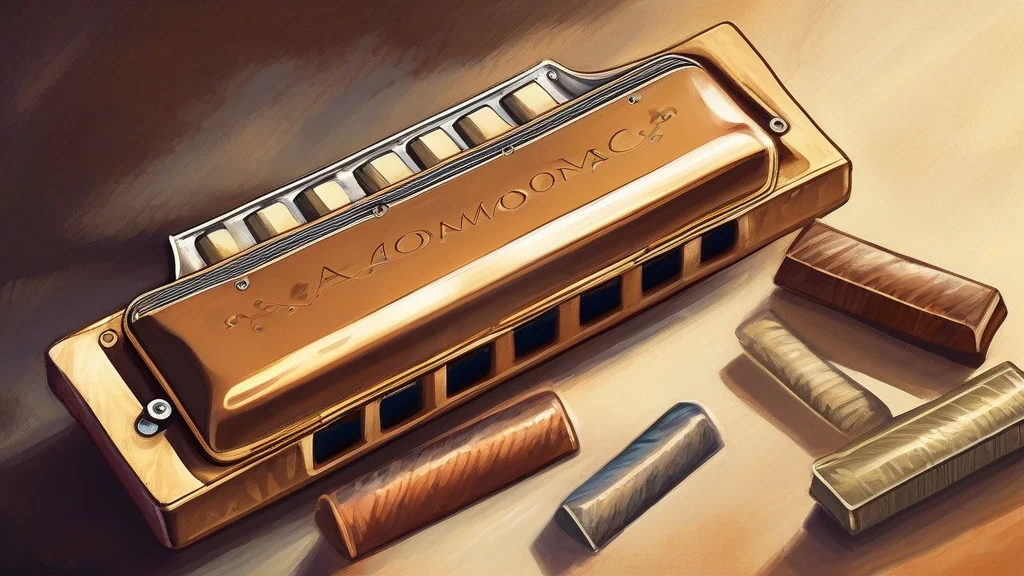
A harmonica is a portable wind instrument played by blowing or drawing air through a row of metal reeds. Because it is held directly in the player's hands, it can be played while walking, sitting, or performing in places where larger instruments are impractical. Its compact size does not limit its musical range: a player can produce individual notes, chords, rhythms, and expressive melodies, often with the expressive bent notes associated with blues, folk, country, and traditional music. The instrument is used in solo performances, ensembles, and as an accompaniment to singing, and its portability has made it especially popular in street performance and folk traditions. “Mouth organ” is a common alternative name, particularly in American English. Although harmonica may sound simple, its use of airflow, breath control, and subtly bent notes gives the player considerable expressive control. The word also has a broader association with harmony, reflecting its origin in the Greek and Latin vocabulary of musical consonance.
nounA small wind instrument played by blowing or drawing air through a series of metal reeds. It can produce single notes, chords, and melodies, and is held in the hands while being played.
- A small mouth-held wind instrument containing a row of free metal reeds, played by blowing or drawing air through them.
"He played a mournful melody on the harmonica beside the campfire."
"The street musician earned coins by playing the harmonica outside the station."
"She began the blues harmonica solo with a long, expressive note."
The regular plural is “harmonicas,” used when referring to more than one harmonica.
"The shop sells harmonicas, cases, instructional books, and spare reeds."
A harmonica can turn a single breath into a melody, a chord, or even the illusion of a whole small band.
Reviewed by Deb Chak, Editor. AI-assisted content curated by RJS Tech Solutions LLP.
Where does harmonica come from?
The word “harmonica” comes through Latin from Greek harmonikos, meaning “of or relating to harmony,” ultimately from a root associated with joining or fitting sounds together. The term was applied in the nineteenth century to the small free-reed instrument, whose multiple reeds can produce different notes and chords. It shares this etymological background with words such as “harmony,” “harmonic,” “harmonize,” and the related instrument name “harmonium.”
How harmonica is actually used
The word is neutral in register. In American English, “mouth organ” is a common synonym; in British English, “harmonica” is especially widespread.
Easily confused with harmonica
A harmonica is played by blowing through a mouth-held instrument, whereas a harmonium is a larger keyboard instrument that produces sound with reeds.