
What does harrower mean?
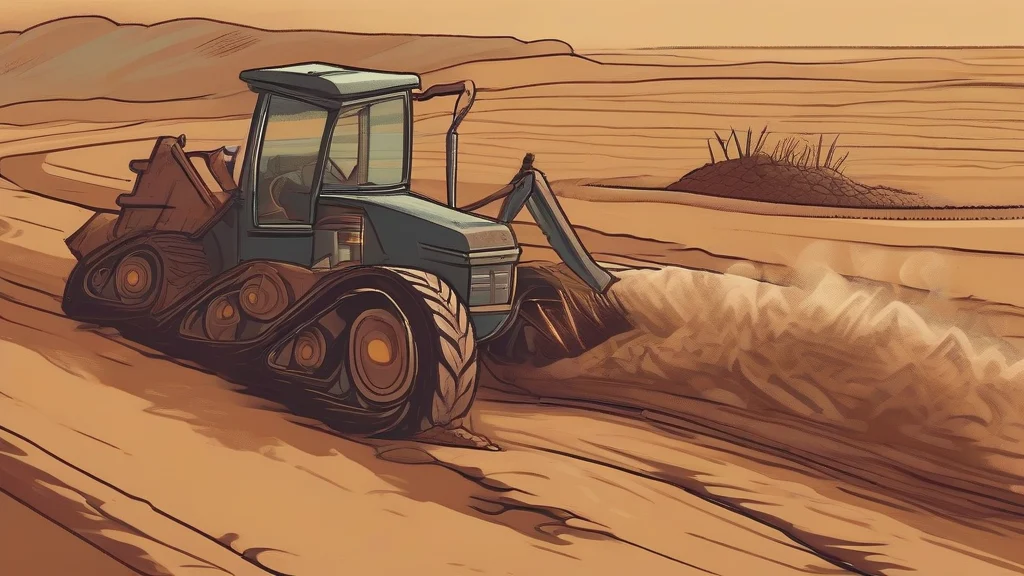
The noun harrower refers to a person or machine that prepares agricultural soil. Most commonly, it means a harrow-like implement fitted with teeth or tines that breaks up clods, levels the surface, and creates a suitable seedbed before sowing. A person engaged in this work may also be called a harrower, although the word is much less frequent in that sense. The verb harrower is simply the third-person singular present form of harrow, while the adjective harrower is the comparative of harrow and means more painful or distressing. In everyday use, the agricultural noun is usually called a harrow, so harrower tends to appear in more specific technical descriptions or in older usage. Its close spelling resemblance to harrier can be misleading: the latter is associated with hunting or pursuit, whereas a harrower works the ground. The word is therefore most useful as a specific term for an agricultural implement or as an example of how regular English inflection changes a word’s grammatical form.
A person or implement that harrows; especially, an agricultural machine with teeth or tines used to break up and level soil before sowing.
"The driver adjusted the harrower until it worked evenly across the field."
The implement is now more commonly called a harrow; harrower remains especially useful in older or more technically specific usage.
The third-person singular simple present form of harrow, meaning to break up or work soil with a harrow.
"The old tractor harrower the field whenever the ground is dry enough."
This is an inflected form of the verb harrow and is not normally used as a standalone dictionary word.
The comparative form of harrow, meaning more painful, distressing, or harrowing.
"The second phase of the treatment proved harrower than the first."
The common modern form of the positive is harrowing, while harrow is now less usual as a standalone adjective.
The plural applies to the noun, whether referring to people or agricultural implements.
"Two harrowers followed the seed drill across the field."
Its teeth are not meant to dig deeply; they comb the field into a fine, receptive seedbed.
Reviewed by Deb Chak, Editor. AI-assisted content curated by RJS Tech Solutions LLP.
Where does harrower come from?
The forms of harrower derive from English harrow. Harrow continues Middle English harwe, from Old English herwa, an old Germanic agricultural term, while the productive suffix -er forms a noun denoting the person or implement that performs an action. The same base also supports the modern third-person verb form and the comparative adjective.
Related word forms
How harrower is actually used
As a noun, harrower is less common than the simpler agricultural term harrow. The verb and adjective uses are chiefly inflected forms and are normally encountered in grammatical contexts rather than used independently as vocabulary items.
Easily confused with harrower
A harrower works soil with agricultural teeth, whereas a harrier is a hunting dog, a bird of prey, or figuratively someone who pursues or torments others.