
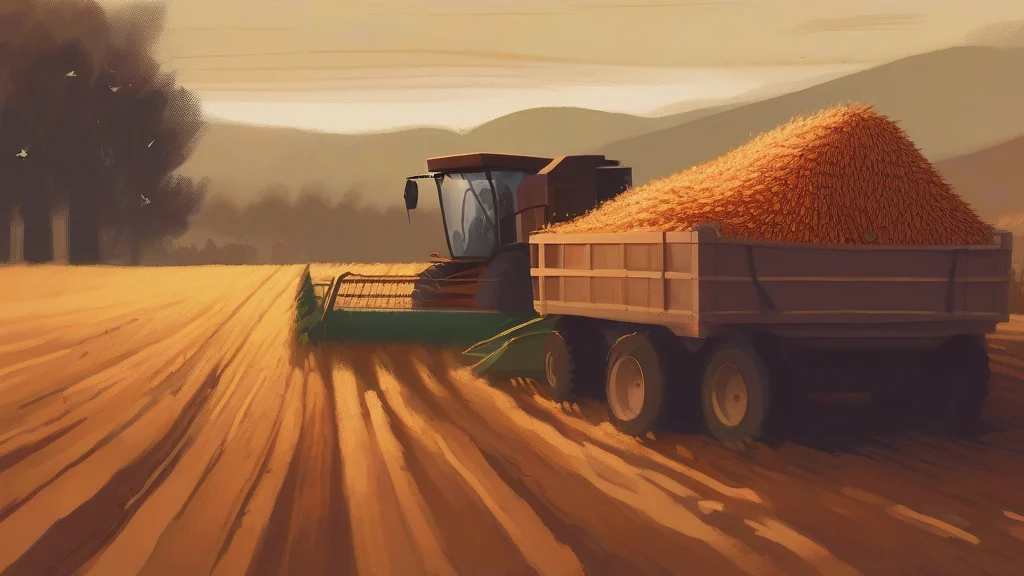
What does harvested mean?
Harvested is the past tense and past participle of harvest and is also used as an adjective describing something that has been gathered. In its traditional agricultural sense, it refers to cutting, picking, or otherwise collecting mature crops such as grain, fruit, or vegetables. The word can also be used figuratively for obtaining a valuable resource, as in harvesting information, benefits, or opportunities. These extended meanings are common and often carry a positive connotation because they suggest gathering something useful or rewarding. As an adjective, harvested commonly occurs in expressions such as “freshly harvested produce” or “harvested fields.” The term is standard in British and American English, with no significant regional restriction.
To gather a mature crop from a field or plant; by extension, to collect or obtain a useful resource.
"Workers harvested the grapes in the cool hours before noon."
The literal sense is standard and neutral. Figurative uses, such as “harvesting information,” are common in general and technical writing.
Gathered from a field or plant; by extension, collected or obtained.
"The farm sells freshly harvested apples at its roadside stall."
This is a participial adjective and is most natural immediately before the noun it modifies.
Harvested can mean far more than picking fruit: a society may harvest data, talent, or goodwill just as farmers gather crops.
Reviewed by Deb Chak, Editor. AI-assisted content curated by RJS Tech Solutions LLP.
Where does harvested come from?
Harvest developed from Old English hǣfest, a word associated with gathering or reaping crops and with the season in which they were gathered. Its modern verb and noun forms continue that older Germanic vocabulary. Related cognates include German Herbst, Dutch oogst, and Danish and Norwegian høst, all denoting a harvest or the season associated with gathering crops. The form harvested simply follows the regular English pattern of adding -ed to the verb harvest.
Related word forms
How harvested is actually used
The word is neutral in ordinary agricultural contexts but can carry a slightly positive or figurative tone when describing benefits, knowledge, or opportunities. As a participial adjective, it normally appears before a noun, as in “harvested crops,” though “the crops were harvested” is also standard.