
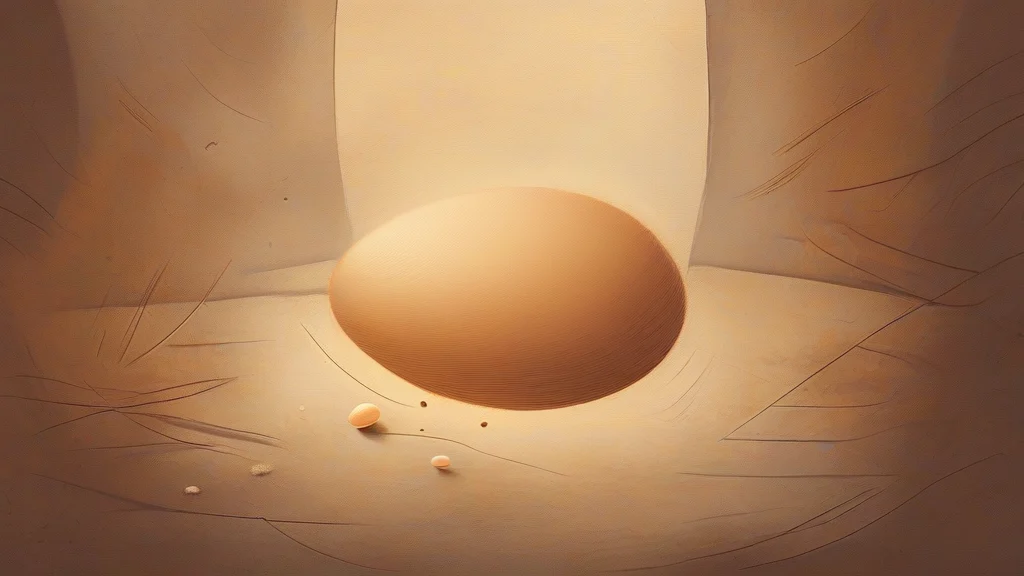
What does hatched mean?
Hatched is chiefly the past tense and past participle of hatch. In ordinary use, it describes a young animal emerging from an egg, as in "the chicks hatched before dawn," or the process of incubating eggs so that they produce young. In descriptive and technical contexts, it is an adjective for something marked with closely spaced parallel or crossing lines. A shaded region on a map or a cut section on a technical drawing is therefore "hatched," and the pattern itself provides the visual explanation. The word carries little emotional coloration in either use; its interest lies in how one form shifts between a biological event and a graphic convention. Writers use the egg sense chiefly in narrative, descriptive, and figurative contexts, while mapmakers, illustrators, and engineers use the marking sense. Recognizing both meanings helps explain why an otherwise simple participle can describe either a newborn chick or a carefully patterned area on a plan.
To emerge from an egg, or to incubate eggs so that young emerge from them.
"The duck hatched eight eggs in the nest."
The form hatched functions as both the past tense and the past participle of hatch.
Marked with closely spaced parallel or crossing lines, especially in a map, diagram, engraving, or technical drawing.
"The architect used a hatched area to show the section through the wall."
This sense is especially associated with cartography, drafting, and printmaking.
A hatched patch on a blueprint is made of lines rather than shade—and those lines signal a section through the object.
Reviewed by Deb Chak, Editor. AI-assisted content curated by RJS Tech Solutions LLP.
Where does hatched come from?
The egg sense of hatched comes through hatch, attested in Middle English and continuing Old English hacian, "to hatch, incubate"; Old English hacian is generally traced to Proto-Germanic. The drawing sense belongs to the related vocabulary of hatch, hatchet, and cross-hatching, in which Old French hacher, meaning "to cut or scratch," and hachure, meaning "engraving or shading," are relevant. The result is two established modern meanings: an animal emerging from an egg and a surface or drawing covered with lines.
Related word forms
How hatched is actually used
In British and American English, the egg sense dominates general prose, while the marking sense is common in cartographic, technical, and artistic contexts. As a past participle, hatched normally appears with an auxiliary, as in "the eggs have hatched."
Easily confused with hatched
A hatchet is a small axe, whereas hatched describes an egg or a surface marked with lines.