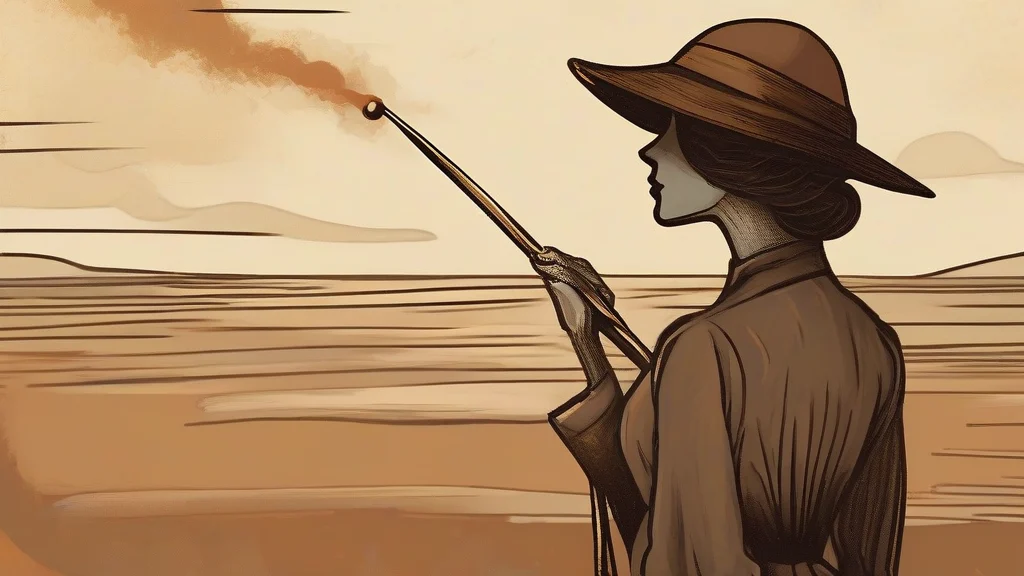
What does hatpin mean?
A hatpin is a long, thin, pointed object used to secure a hat in place. It was a popular fashion accessory among women in the late 19th and early 20th centuries, particularly in formal or historical contexts. Hatpins are often associated with the fashion of the time, and are typically used to add a touch of elegance or sophistication to a hat. While they are no longer a common fashion accessory, hatpins can still be found in historical or vintage contexts, and are often used as a decorative element in hats or other fashion items. The term 'hatpin' is often used interchangeably with 'hat tack' or 'hat fastener', although these terms may refer to slightly different types of objects. Overall, the hatpin is a distinctive and iconic fashion accessory that continues to be associated with the fashion of the past.
nounA hatpin is a long, thin, pointed object used to secure a hat in place, typically worn by women in the late 19th and early 20th centuries.
- A long, thin, pointed object used to secure a hat in place.
"She carefully pinned her hat in place with a hatpin before attending the formal gala."
"She carefully pinned her hat in place with a hatpin before attending the formal gala."
"In the 19th century, hatpins were a popular fashion accessory among women."
Used to refer to multiple hatpins, or to indicate that the hatpins are being used collectively.
"She carefully pinned her hat in place with multiple hatpins before attending the formal gala."
Reviewed by Deb Chak, Editor. AI-assisted content curated by RJS Tech Solutions LLP.
Etymology of hatpin
The word 'hatpin' is derived from the Old English words 'hat' and 'pin', with the latter referring to a small, pointed object used to fasten or secure something. The term 'hatpin' emerged in the late 19th century, as women's fashion began to feature more elaborate and decorative hats. The hatpin was a key component of this fashion, used to secure the hat in place and add a touch of elegance or sophistication.
How hatpin is actually used
Hatpins are typically used in formal or historical contexts, and are often associated with women's fashion from the late 19th and early 20th centuries.