
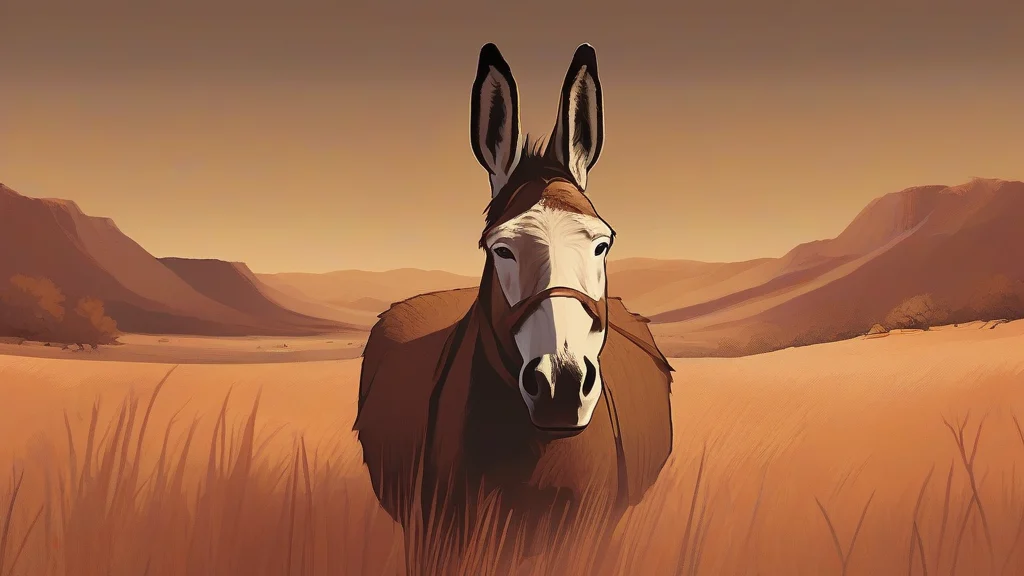
What does heehawing mean?
Heehawing is the present-participle form of an English verb meaning to make a loud, braying sound like that of a donkey. It can also describe laughing or jeering loudly, as when a group of people heehaw at a performer or comedian. The word is chiefly associated with North American English and has an informal, often mocking tone, although the laughter it denotes may be amused rather than hostile. Its distinctive sound comes from the reduplicated expression “hee-haw,” an imitation of an animal's bray. The present-participle ending makes it especially natural in descriptions of continuing action, such as “The children were heehawing in the yard.” Because heehawing evokes both animal noise and rowdy human laughter, it is memorable in contexts where sound, amusement, and ridicule intersect.
verbTo make a loud, braying sound like that of a donkey. By extension, it can mean to laugh or jeer loudly and boisterously.
- To make a loud braying or cackling sound, especially like that of a donkey.
- To laugh or jeer loudly and boisterously.
"The children were heehawing with laughter at the clown's exaggerated entrance."
"The donkey started heehawing as soon as it saw the feeding trough."
"The audience sat in silence at first, then several people began heehawing at the performance."
Two syllables, one unmistakable sound: the word that lets a donkey—or a delighted audience—make itself heard.
Reviewed by Deb Chak, Editor. AI-assisted content curated by RJS Tech Solutions LLP.
Where does heehawing come from?
Heehawing derives from the reduplicated imitative expression “hee-haw,” which represents the braying sound of a donkey. The expression was established in English by the nineteenth century and developed into both a verb and a noun. “Heehaw” and “hee-haw” are the best-known spelling variants, with “heehaw” particularly associated with North American usage.
How heehawing is actually used
Informal and often mildly derisive or mocking, especially when used of noisy laughter. The donkey sound is the conventional image, but modern usage can also describe people laughing loudly.
Easily confused with heehawing
Hee-haw and heehaw are spelling variants of the same imitative expression; heehaw is also used for loud, boisterous laughter rather than only the sound made by a donkey.