
What does heifer mean?
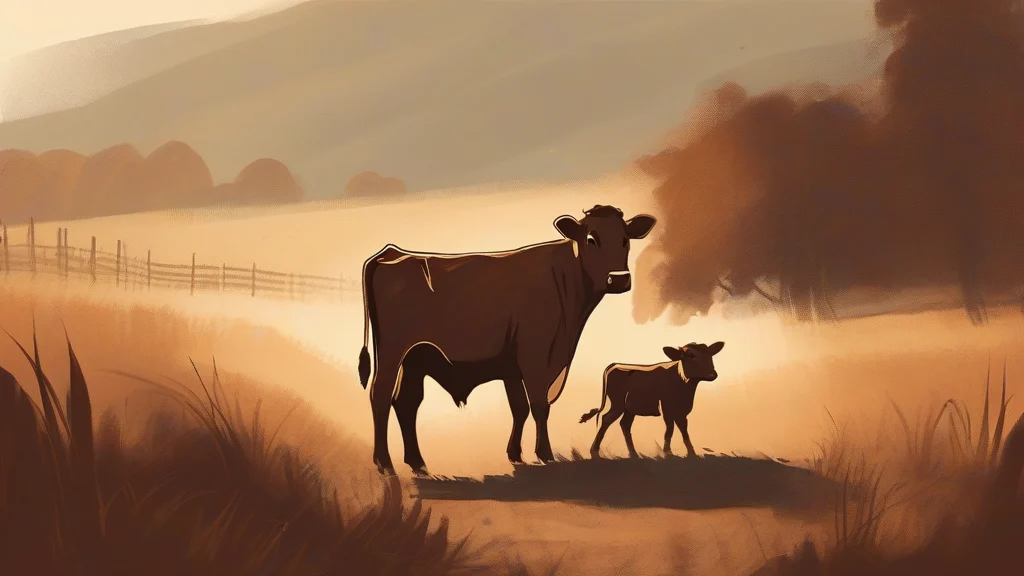
Heifer is the standard farm word for a young female cow, usually one that has not yet calved. The term distinguishes her from a mature cow and, in cattle terminology, from a young male such as a bull calf or, when castrated, a steer. Heifers may be kept for dairy breeding, for producing replacement dairy animals, or for beef production, so the word does not imply a particular product or agricultural system. In careful usage, heifer refers to female cattle before her first calving, while cow is normally used after that event; dictionaries sometimes define the word more broadly simply as a young cow. Its pronunciation is stable in both British and American English: HEIF-er, with the stress on the first syllable. Heifer is therefore more specific than the general calf, which can refer to either sex, and its usefulness lies in making an animal’s sex, age, and breeding status explicit in livestock records and conversation.
nounA young female bovine that has not yet calved, especially one raised for breeding or meat production.
- A young female bovine, especially one that has not yet calved.
"The young heifer was due to calve in the spring."
"The auctioneer said the eleven-month-old heifer had been raised on pasture."
"In her first calving, the two-year-old heifer produced a healthy heifer calf."
The standard plural takes -s and agrees with a singular or plural verb according to number.
"Several heifers were grazing beside the barn."
Before her first calf, she is a heifer; afterward, she is a cow.
Reviewed by Deb Chak, Editor. AI-assisted content curated by RJS Tech Solutions LLP.
Where does heifer come from?
The modern English form continues Middle English heifer, which comes from Old English hǣfru, meaning “young cow.” It is an inherited Germanic word rather than a modern borrowing. Its older general sense has developed into the more specific modern livestock category for a female bovine that has not yet calved.
How heifer is actually used
This is neutral, standard livestock terminology in both British and American English, although it is more characteristic of agricultural contexts than everyday conversation. In careful farming usage, it normally refers to female cattle that has not yet given birth; after the first calving, she is generally called a cow.