
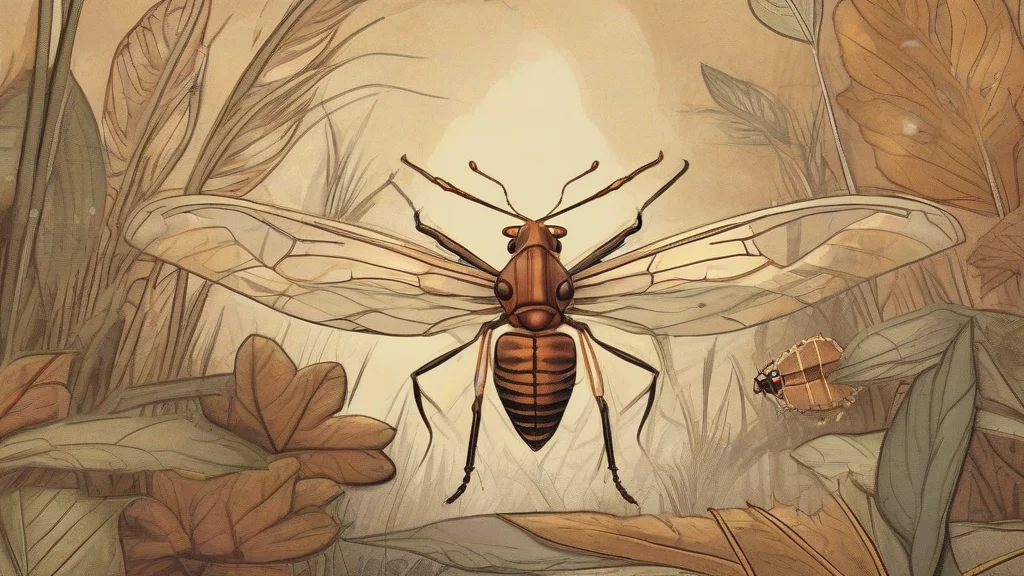
What does hemipteran mean?
A hemipteran is an insect belonging to the order Hemiptera, a large and varied group that includes true bugs, cicadas, aphids, leafhoppers, scale insects, and many other familiar insects. The term may also function as an adjective, as in “hemipteran species” or “hemipteran diversity.” Most hemipterans have piercing or sucking mouthparts, although their bodies, wings, and habits vary considerably. Some feed on plant sap, others prey on small insects or consume blood. The word is used mainly in scientific, agricultural, and ecological contexts, where it provides a concise way to refer to members of the order. In ordinary discussion, a common name such as “aphid,” “cicada,” or “true bug” is usually more accessible. Hemipteran is nevertheless useful because it identifies a particular insect order without requiring the reader to know a species-level name. The group is of considerable ecological and agricultural importance, with many species regarded as pests and others acting as predators or prey.
An insect belonging to the order Hemiptera, including true bugs, cicadas, aphids, leafhoppers, and scale insects.
"The entomologist examined a hemipteran preserved in amber."
Used chiefly in specialist zoological, entomological, and agricultural contexts.
Relating to or characteristic of an insect belonging to the order Hemiptera.
"The study compared hemipteran abundance across two types of farmland."
The adjective is formal and primarily used in scientific and ecological writing.
The standard plural of the noun is hemipterans; Hemiptera is the formal taxonomic order name and should not be used as the plural of this word.
"Several hemipterans were collected from the underside of the leaves."
A hemipteran belongs to a group whose name literally means “half-winged,” a reference to the partly hardened forewings found in many true bugs.
Reviewed by Deb Chak, Editor. AI-assisted content curated by RJS Tech Solutions LLP.
Etymology of hemipteran
Hemipteran derives from New Latin Hemiptera, the taxonomic name for the order, which was formed from Greek hemi-, meaning “half,” and pteron, meaning “wing.” The compound was created to characterize insects whose forewings differ markedly from their hindwings, particularly through the presence of a hardened basal portion. The English forms hemipteran, hemipterous, hemipteral, and hemipterid all reflect this shared Greek and New Latin origin.
How hemipteran is actually used
The word is chiefly formal, technical, or taxonomic. In general writing, “true bug” or a more specific common name is often clearer, especially when referring to a particular insect.
Easily confused with hemipteran
Hemipteran can be a noun naming an insect in the order Hemiptera, whereas hemipterous is primarily an adjective meaning belonging to or characteristic of that order.