
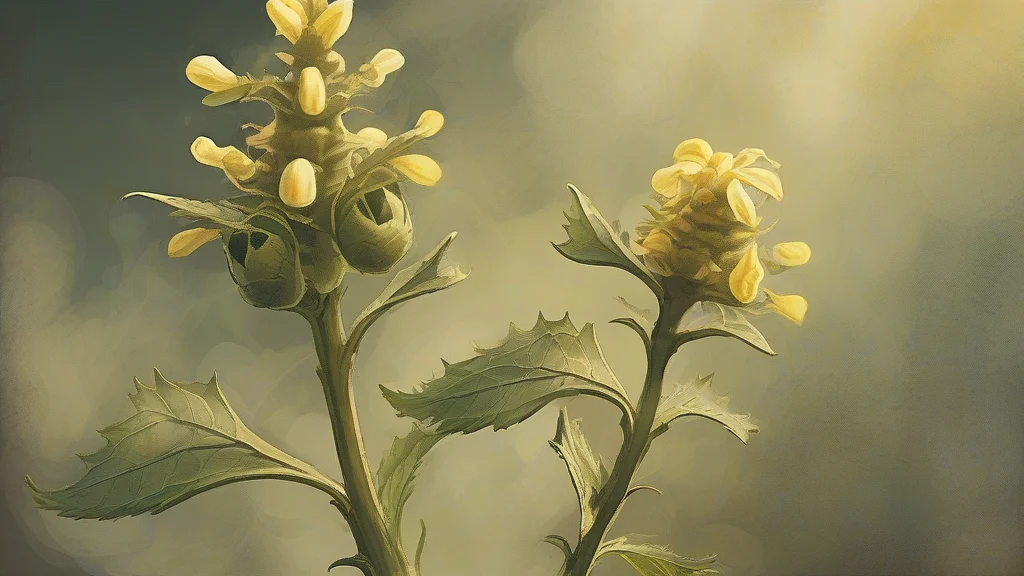
What does henbane mean?
Henbane is a highly poisonous plant in the nightshade family, most commonly referring to Hyoscyamus niger, a species with sticky, hairy foliage and yellowish flowers marked with purple veins. Every part of the plant contains tropane alkaloids, including hyoscyamine and scopolamine, which can cause delirium, paralysis, seizures, coma, and death if swallowed. The word is used in medicine and toxicology when discussing poisoning, in botany when identifying the plant, and in historical writing in connection with old remedies and dangerous herbal preparations. Its name combines “hen” with “bane,” an Old English word for poison or destruction, although the precise historical reason for the association with hens is uncertain. Henbane is therefore both a botanical term and a vivid example of a plant whose attractive appearance can conceal extreme toxicity. Modern references generally emphasize the plant’s danger and discourage any attempt to handle or consume it without expert knowledge.
nounA poisonous plant of the nightshade family, especially the species Hyoscyamus niger, with sticky, hairy leaves and yellowish or purplish flowers. Its alkaloids, including hyoscyamine and scopolamine, can cause serious poisoning and death.
- A poisonous plant of the nightshade family, especially Hyoscyamus niger.
"The herbalist warned that even a small amount of henbane could be fatal."
"The herbalist warned that even a small amount of henbane could be fatal."
"The toxicology report identified henbane poisoning as the likely cause of the patient’s severe symptoms."
The plural is possible but uncommon; the word is often used in the singular as the name of a poisonous plant or substance.
"Several henbanes grew along the edge of the abandoned field."
Henbane is a garden warning disguised by delicate flowers: the beautiful plant contains alkaloids powerful enough to cause fatal poisoning.
Reviewed by Deb Chak, Editor. AI-assisted content curated by RJS Tech Solutions LLP.
Words that share this root
How henbane is actually used
Henbane is primarily used in botanical, medical, toxicological, and historical contexts. In literary use, it may evoke poison, danger, irrationality, or an ominous influence. The name is sometimes accompanied by the species name “black henbane” to distinguish the common plant.
Easily confused with henbane
Henbane is a nightshade with sticky, hairy leaves and yellowish or purplish flowers, whereas hemlock has finely divided leaves and clusters of small white flowers.