
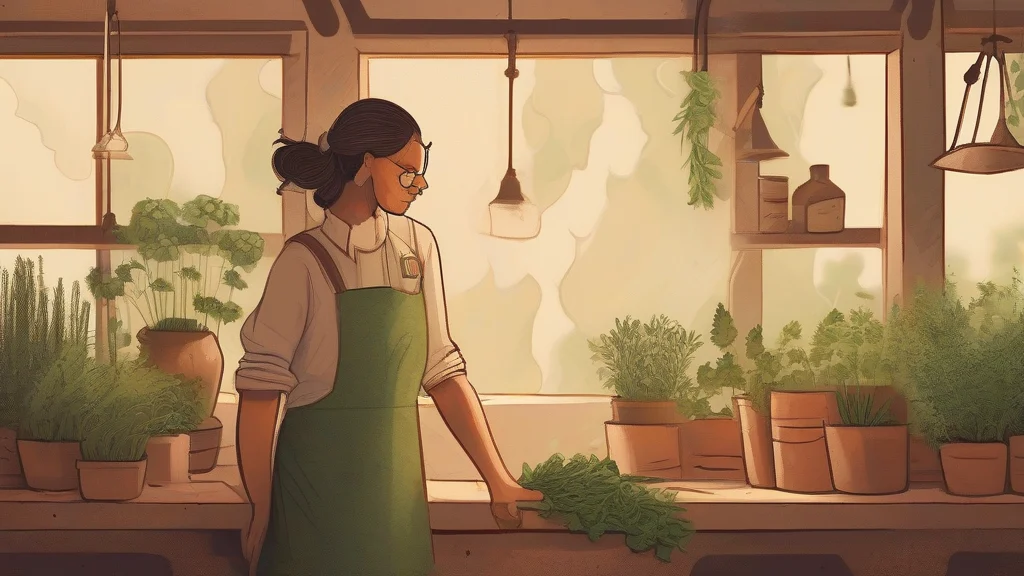
What does herby mean?
Herby is an adjective describing something covered or filled with herbs, or something that has the smell, flavor, or appearance of herbs. It is especially useful for food and literary description: a 'herby aroma' may suggest a dish rich in thyme, basil, rosemary, or mint, while a 'herby meadow' evokes a landscape populated by fragrant plants. The word can suggest abundance and sensory richness rather than merely the occasional use of a seasoning. It is used in both British and American English, though it tends to sound somewhat literary or descriptive compared with the plainer phrase 'full of herbs.' Herby is also appropriate for places where herbs naturally grow, giving it a slightly poetic quality. It is a useful word when the presence or character of herbs is central to the description, especially in writing about cooking, gardens, and the natural world.
adjectiveCovered with, filled with, or having the smell or flavor of herbs. It can also describe a place or landscape in which herbs grow abundantly.
- Covered with, filled with, or richly flavored by herbs.
- Having the smell, taste, or appearance of herbs.
"The kitchen was filled with the warm, herby scent of basil and rosemary."
"The chef served a herby tart with tomatoes, thyme, and soft goat cheese."
"Beyond the stone wall, the herby meadow glowed green in the afternoon sun."
The word herby is a tiny recipe in itself: it announces that herbs are not merely an ingredient, but a dominant character.
Reviewed by Deb Chak, Editor. AI-assisted content curated by RJS Tech Solutions LLP.
Where does herby come from?
Herby is an English formation based on herb with the suffix -y, meaning 'full of' or 'characterized by.' The word herb is borrowed from Old French herbe, which comes ultimately from Latin herba, 'grass, green plant, or herb.' Related English words include herbage, herbal, and herbaceous, all reflecting the same botanical and culinary tradition.
How herby is actually used
Herby is especially common in descriptive and literary contexts, particularly when discussing food, scents, gardens, and landscapes. It is more evocative than simply saying 'full of herbs' and can suggest a pronounced or dominant herbal quality.