
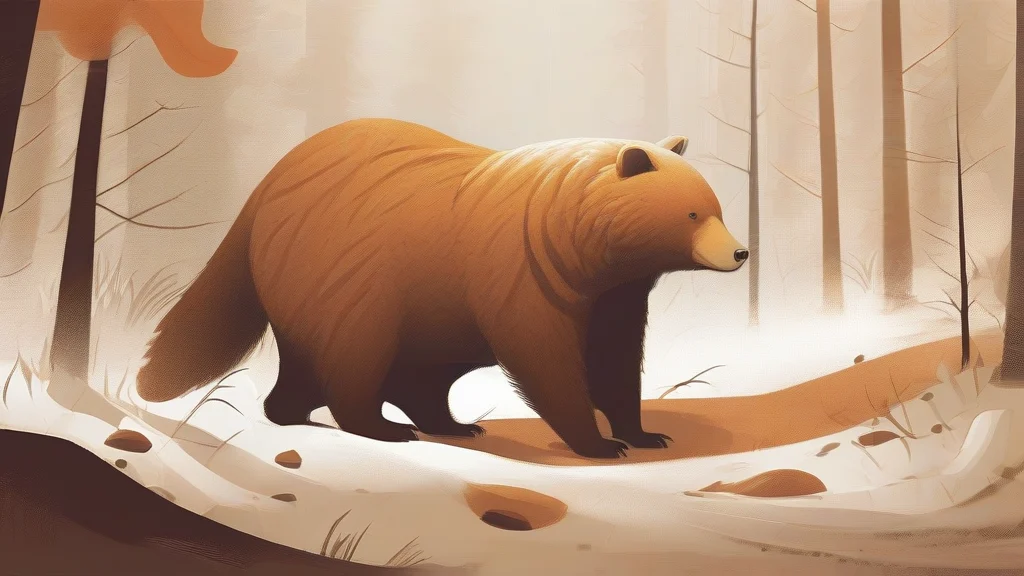
What does hibernate mean?
Hibernate most commonly means to spend the winter in a state of deep dormancy, with greatly reduced activity and metabolism. In its biological sense, the word describes animals such as bears, bats, and some rodents that become inactive for extended periods during cold or food-scarce seasons. Hibernation is more than ordinary sleep: an animal's physiological functions slow substantially, and it may remain unresponsive for long stretches before returning to normal activity. The word also has a well-established figurative use for people, organizations, or projects that become dormant, temporarily inactive, or difficult to reawaken. “The company went into a financial hibernation during the downturn” suggests a prolonged retreat rather than a brief pause. Hibernation is especially associated with cold-climate animals, although related forms of seasonal dormancy occur in other climates and during hot, dry periods. Because these patterns differ, not every inactive animal should be described as hibernating. The familiar word is also useful because it captures inactivity that is deliberate or profound: something that has not merely slowed down but has effectively shut down, waiting for conditions that will bring it back.
To remain dormant for an extended period, typically through winter, with greatly reduced physiological activity; by extension, to become or remain inactive for a prolonged period.
"The tortoise hibernated beneath the soil until the warmth of spring returned."
The verb is intransitive. Figurative use often suggests a retreat or shutdown long enough to resemble the biological state.
An animal that is in a state of hibernation.
"Researchers fitted a tracking device on the hibernate before releasing it into its winter den."
This noun is rare in modern English; hibernation is normally used for the state or process.
The plural refers to multiple animals that are hibernating; the state or process itself is “hibernation.”
"Several hibernates were found sheltering beneath the fallen trees."
Some Arctic ground squirrels hibernate so deeply that their body temperature falls close to freezing.
Reviewed by Deb Chak, Editor. AI-assisted content curated by RJS Tech Solutions LLP.
Where does hibernate come from?
English hibernate was borrowed from Latin hibernare, “to pass the winter,” a verb formed from hibernus, “wintry” or “of winter.” The Latin root in turn traces to an Indo-European word for winter. Related forms include Latin hibernalis, the source of English hibernal, and hibernaculum, meaning winter quarters; the English noun hibernation was patterned on Latin hibernatio.
Related word forms
How hibernate is actually used
Hibernate is normally intransitive and does not take a direct object. Its biological use is especially associated with animals during cold or food-scarce seasons. In figurative use, it can imply either a temporary withdrawal or a prolonged state resembling shutdown. The noun “hibernate” is rare; “hibernation” is the usual noun for the state or process.
Easily confused with hibernate
To hibernate is to remain dormant for a prolonged period, whereas to hyphenate is to join words or names with a hyphen.