
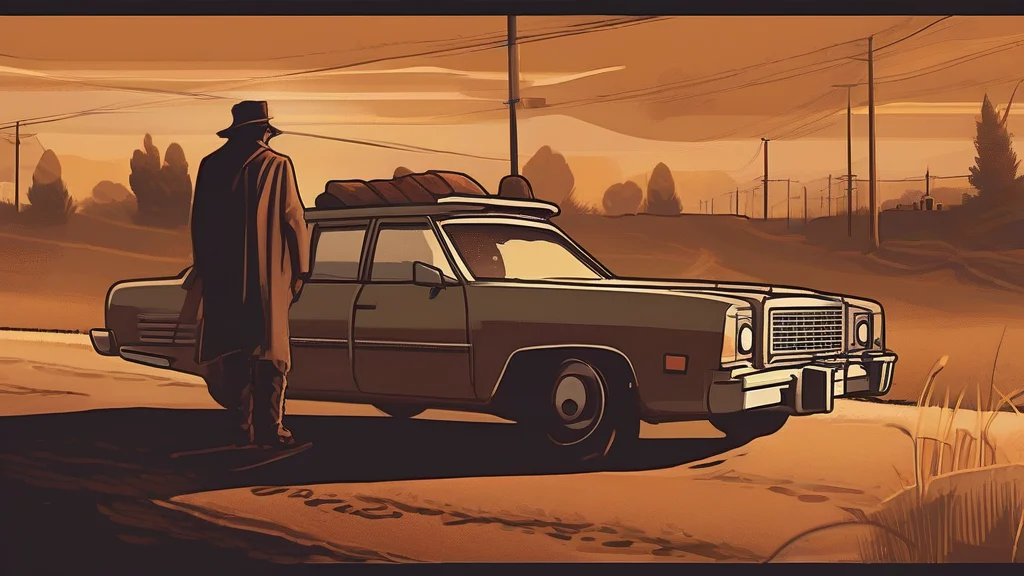
What does hitcher mean?
A hitcher is a person who travels by hitchhiking, requesting lifts from passing cars, lorries, or other vehicles rather than buying a ticket. The word is informal and is less usual than “hitchhiker,” but it can sound vivid because it focuses on the person’s dependence on a chance opportunity for transport. A hitcher might be described as standing at a roadside, signalling for a vehicle, or accepting a ride from a sympathetic driver. While the primary meaning concerns travel, the word can occasionally be used more generally for someone or something that hooks onto or attaches to another object. In everyday English, however, the road-travel sense is by far the most common, and “hitchhiker” is usually the preferred term in neutral writing.
nounA person who hitchhikes, especially one who travels by getting free lifts from passing vehicles. In some contexts, the word can also refer to a person or thing that attaches or hooks onto something.
- A person who hitchhikes or seeks rides from passing vehicles.
"The hitcher waited by the roadside until a truckdriver offered him a lift."
"A young hitcher stood outside the petrol station with a rucksack and a thumb extended."
"The driver slowed down when he noticed the hitcher trying to flag down a car."
The regular plural is used for multiple people who hitchhike or seek rides.
"Several hitchers waited near the entrance to the service station."
One word can turn a roadside wait into a journey: a hitcher relies on a chance ride from a passing driver.
Reviewed by Deb Chak, Editor. AI-assisted content curated by RJS Tech Solutions LLP.
Where does hitcher come from?
“Hitcher” is formed from the verb “hitch” together with the suffix “-er,” which traditionally marks a person who performs an action. Its familiar meaning developed through the practice of obtaining a free vehicle ride, now called hitchhiking. The related verb “hitchhike” uses the same base and reflects the same journey by requesting a ride along a road.
How hitcher is actually used
Informal and less common than “hitchhiker.” It is most often used in narrative descriptions of road travel and in contexts involving a person who obtains a lift without paying.
Easily confused with hitcher
Both words can mean someone who obtains free transport, but “hitchhiker” is the more usual and neutral term, while “hitcher” is more informal and sometimes emphasizes the person’s method of travel.