
What does hoer mean?
A hoer is a person who works with a hoe, traditionally clearing weeds, loosening soil, or tending crops. In earlier English, the term could denote any worker whose principal task was using a hoe, although it could also serve more generally as a label for an agricultural labourer. Today, “hoer” is chiefly historical or archaic rather than part of ordinary modern vocabulary. “Weeder” and “labourer” are more common modern substitutes, but neither has exactly the same narrow focus: a hoer is defined specifically by the use of a hoe, while a weeder may use any suitable implement and a labourer may perform many kinds of farm work. The word is consequently most useful when reading period farming accounts, historical novels, or records of rural employment.
nounA person who hoes, especially one employed to cultivate or weed a field with a hoe. The word is now chiefly historical or archaic.
- A person who uses a hoe, especially to cultivate, weed, or loosen soil.
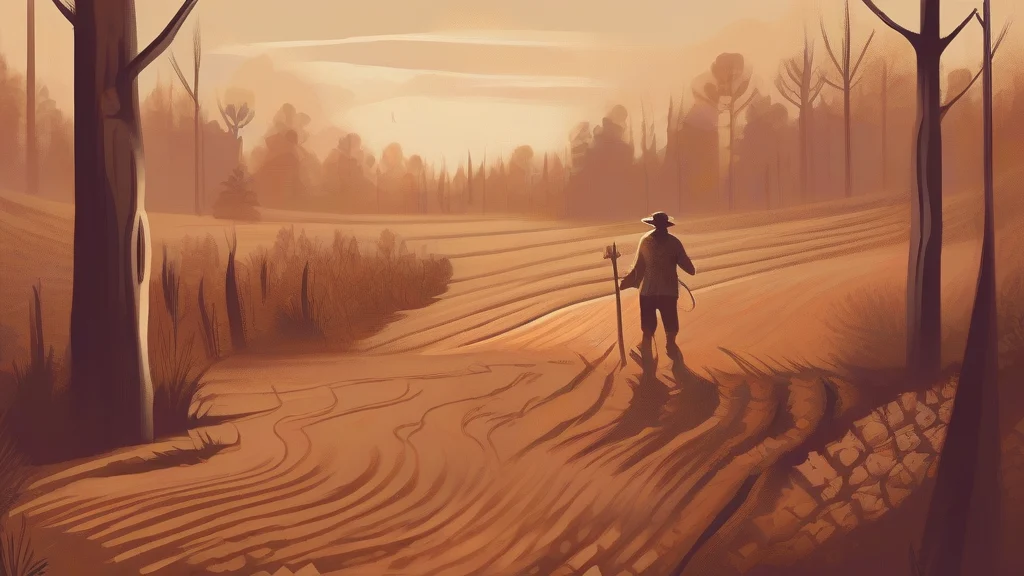
"The hoer worked slowly along the row, breaking the clods of earth with his hoe."
"Each hoer was given a long strip of the field to clear."
"The novel describes a young hoer beginning work at dawn."
The usual plural for two or more people employed as hoers.
"The hoers began clearing the field before sunrise."
Once an ordinary name for a common farm worker, “hoer” survives mainly in historical records and period literature.
Reviewed by Deb Chak, Editor. AI-assisted content curated by RJS Tech Solutions LLP.
Etymology of hoer
The word is an agent noun formed from “hoe” with the suffix “-er”, meaning “one who performs the action”. Its development belongs to the Middle English period, when occupational terms ending in “-er” commonly identified workers according to their tool or task. The exact earliest recorded use of the particular form is less important than its clear relationship with agricultural hoeing, and the word now survives mainly in historical usage.
How hoer is actually used
Chiefly historical, archaic, or literary in modern English. It may be encountered in older records of agricultural labour and in historical fiction.