What does hogan mean?
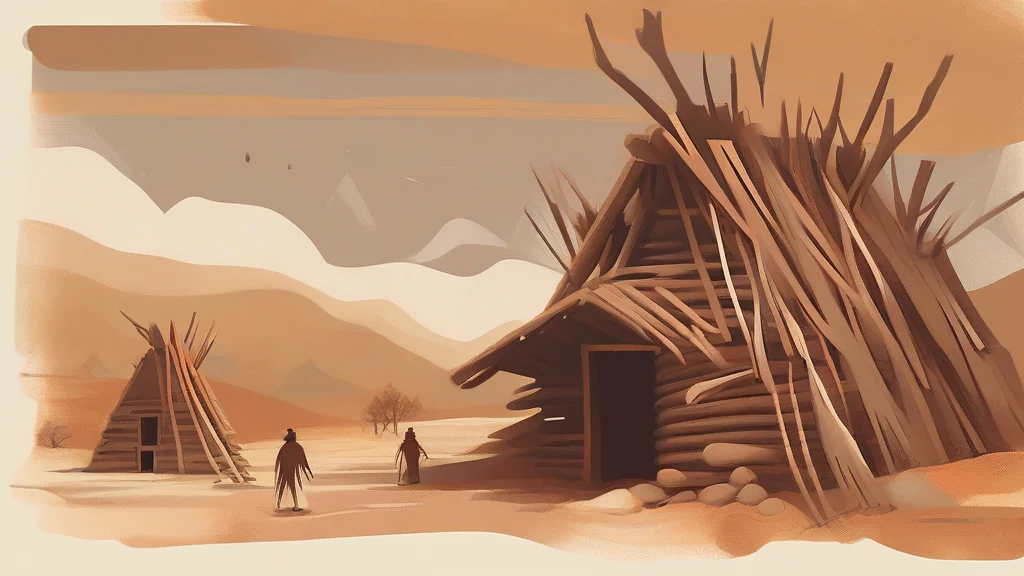
A hogan is a traditional dwelling of the Navajo people, typically made of logs or branches, and often used for ceremonial purposes. It can also refer to a small, simple house or hut. The term 'hogan' is derived from the Navajo language, where it is spelled 'hógoon'. In modern usage, the word 'hogan' is often used to describe a small, rustic dwelling, and is sometimes associated with the idea of a simple, natural way of life. The hogan is an important part of Navajo culture and history, and continues to be used today for both practical and ceremonial purposes. The word 'hogan' is also used in other contexts, such as in reference to a small, simple house or hut, and is often associated with the idea of a cozy, intimate space. Overall, the hogan is a unique and fascinating word that reflects the rich cultural heritage of the Navajo people.
A traditional dwelling of the Navajo people, typically made of logs or branches, and often used for ceremonial purposes.
"The Navajo family built a new hogan on their land, using traditional materials and techniques."
A small, simple house or hut.
"The small hogan was a cozy retreat from the city."
Reviewed by Deb Chak, Editor. AI-assisted content curated by RJS Tech Solutions LLP.
Etymology of hogan
The word 'hogan' is derived from the Navajo language, where it is spelled 'hógoon'. The term is thought to have originated from the Navajo word 'hógoon', which means 'house' or 'dwelling'. The word 'hogan' was later adopted into English, where it has taken on a broader meaning to refer to a small, simple house or hut.
How hogan is actually used
The word 'hogan' is often used in reference to traditional Navajo dwellings, and is sometimes associated with the idea of a simple, natural way of life. In modern usage, the word 'hogan' is often used to describe a small, rustic dwelling, and is sometimes associated with the idea of a cozy, intimate space.