
What does honeycombed mean?
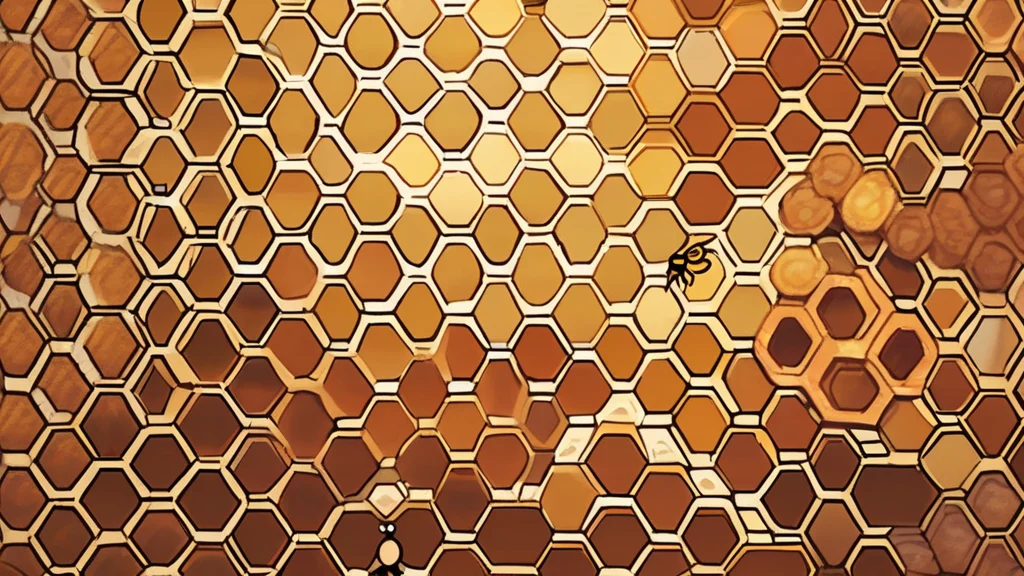
Honeycombed means full of small cells or chambers arranged in a way that resembles the structure made by bees. The word is especially associated with honeycomb, the cluster of hexagonal wax cells in which bees store honey. In ordinary use, it can describe any surface or building riddled with small cavities, passages, or interconnected spaces: a cliff may be honeycombed with caves, while a modern structure may have a honeycombed design. It can also carry a metaphorical implication of complexity, division, or hidden activity. Although the word is firmly established in English, it is more descriptive and vivid than the simpler words cellular or chambered. It is particularly useful when the pattern of cells or interconnected compartments is significant rather than merely incidental.
Having or consisting of numerous small hexagonal cells or chambers, especially like a bee's honeycomb.
"The roof's honeycombed panels allowed light to filter into the atrium."
Often used figuratively for surfaces or structures filled with interconnected spaces.
To form or become filled with a network of small cells or cavities.
"The limestone was honeycombed by centuries of water erosion."
Less common than the adjective; usually used in descriptions of natural or architectural surfaces.
Honeycombed describes the extraordinary way nature and architecture divide space into tiny, efficient chambers.
Reviewed by Deb Chak, Editor. AI-assisted content curated by RJS Tech Solutions LLP.
Etymology of honeycombed
The word is formed from honeycomb, a compound of honey and comb. Both elements are of Germanic origin: honey continues Old English hunig, while comb continues Old English camb, referring to the toothed part of a comb. The compound honeycomb developed in Middle English, and honeycombed is the adjective or participial form describing something made up of or filled with honeycomb-like cells.
Related word forms
How honeycombed is actually used
Usually used descriptively and somewhat figuratively. In technical or architectural contexts, it emphasizes a repeating cellular structure; in general contexts, it can suggest a place riddled with passages, rooms, or hidden spaces.