
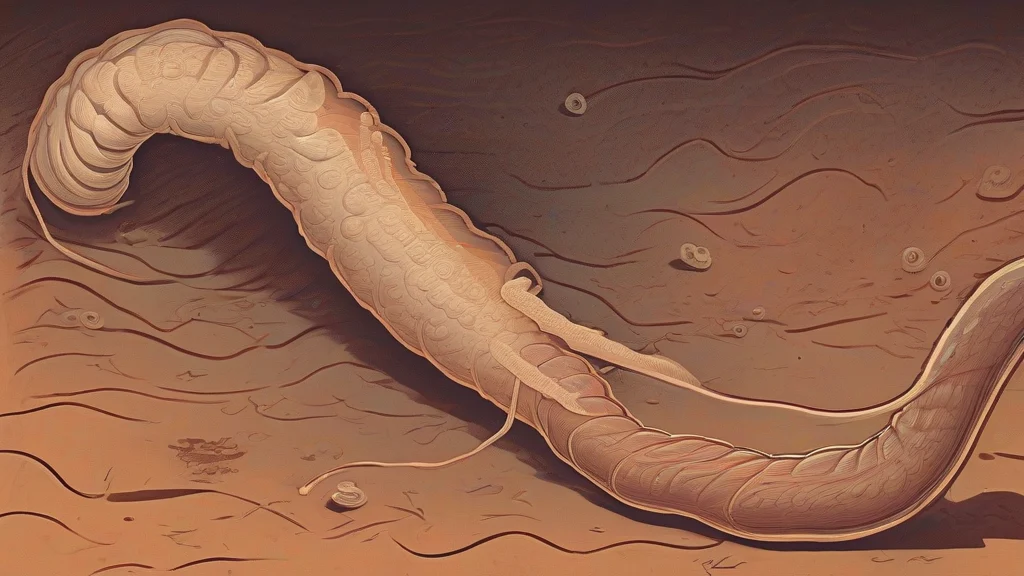
What does hookworm mean?
A hookworm is a parasitic roundworm that uses small hook-like structures at the front of its body to attach to the wall of a host's intestine. The best-known human hookworms belong to the genera Ancylostoma and Necator; their larvae can penetrate bare skin, and the resulting infection may cause abdominal discomfort, anemia, and other health problems. Historically, “hookworm” also referred to a dishonest thief who used a bent wire or similar implement to steal goods from shops. Today, the biological meaning is dominant, while the criminal meaning survives mainly in older literature. The word is especially memorable because it combines two simple, concrete ideas: a “hook,” which secures the parasite or helps a thief take something, and a “worm,” which identifies the creature or disparages the person.
A parasitic roundworm, particularly one of the species that attach to the human intestinal wall by means of hook-like mouthparts.
"Improved sanitation can prevent hookworm larvae from contaminating soil and entering the body through bare feet."
The biological term is technical; in everyday health contexts, it usually refers to infection by Ancylostoma duodenale or Necator americanus.
A thief who used a hooked implement to steal goods.
"The shopkeeper believed that a hookworm had entered during the night."
This sense is archaic and is now found chiefly in literary or figurative use.
The plural is used for multiple worms and, by metonymy, for a hookworm infection.
"Testing revealed that several hookworms had attached themselves to the patient's intestine."
One of the oldest ways to become a bookworm was accidentally becoming a hookworm.
Reviewed by Deb Chak, Editor. AI-assisted content curated by RJS Tech Solutions LLP.
Where does hookworm come from?
The word is a compound of “hook” and “worm,” both inherited from Old English: hōc denoted a hook, crook, or anchor, while wyrm referred to a worm or serpent. The name reflects the hooked structures with which the parasite attaches itself. The separate sense for a thief who used a hook-like implement arose from a straightforward comparison between the implement's shape and its deceptive function.
How hookworm is actually used
In biology, the term is technical and refers chiefly to parasites of the genus Ancylostoma or Necator. The thief sense is dated or archaic and survives mainly in figurative or literary contexts.
Easily confused with hookworm
A hookworm is a parasitic worm, whereas a bookworm is someone who reads avidly.