
What does hula mean?
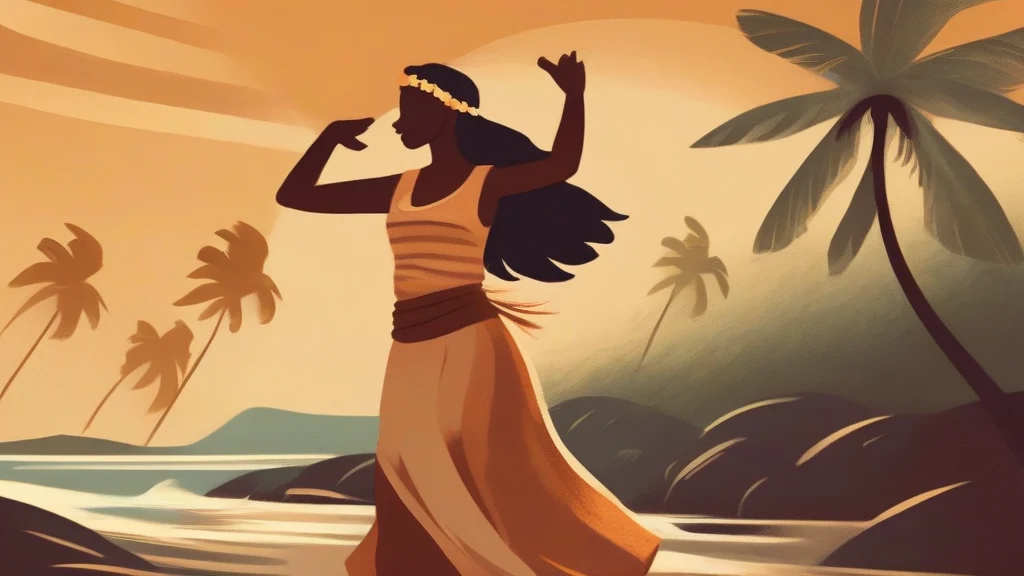
A hula is a Hawaiian dance in which the body becomes a means of expression. Traditional hula uses carefully shaped hand movements, gestures, rhythm, and storytelling to convey chants and historical, genealogical, or cultural meanings. Although the best-known forms are associated with Hawaiʻi and broader Polynesian culture, the word is also used in English for a lively social dance inspired by hula movements and performed to Hawaiian or popular music. The expression “hula dancer” commonly describes someone who performs the dance, while “hula hoop” and “hula skirt” use the word in a separate sense. In cultural settings, the term has a specific and respectful meaning; in casual speech, it often refers simply to a playful, informal dance.
A traditional Hawaiian dance characterized by rhythmic movement, gestures, and storytelling.
"The hula began with a chant that introduced a story from Hawaiian history."
This is the primary cultural and historical sense of the word.
To dance a hula, especially as a Hawaiian-style social dance.
"They hula-ed to the music until the party ended."
Informal and usually transitive in the sense of dancing a hula; the form “hula” is also common.
The plural is used for distinct dances, performances, or examples of the activity.
"The program featured several traditional hulas from different islands."
The hula is more than a dance: its gestures can preserve history, genealogy, and the stories of Hawaiian communities.
Reviewed by Deb Chak, Editor. AI-assisted content curated by RJS Tech Solutions LLP.
Where does hula come from?
The English word comes from Hawaiian, where “hula” denotes a traditional dance. Its precise deeper historical origin is associated with Polynesian language traditions, but the English borrowing has generally been used for both the traditional Hawaiian dance and later Hawaiian-style social dances.
Related word forms
How hula is actually used
In its traditional sense, the term refers specifically to a Hawaiian dance and should be used respectfully in cultural contexts. In everyday use, it can refer more broadly to a Hawaiian-style party dance.