
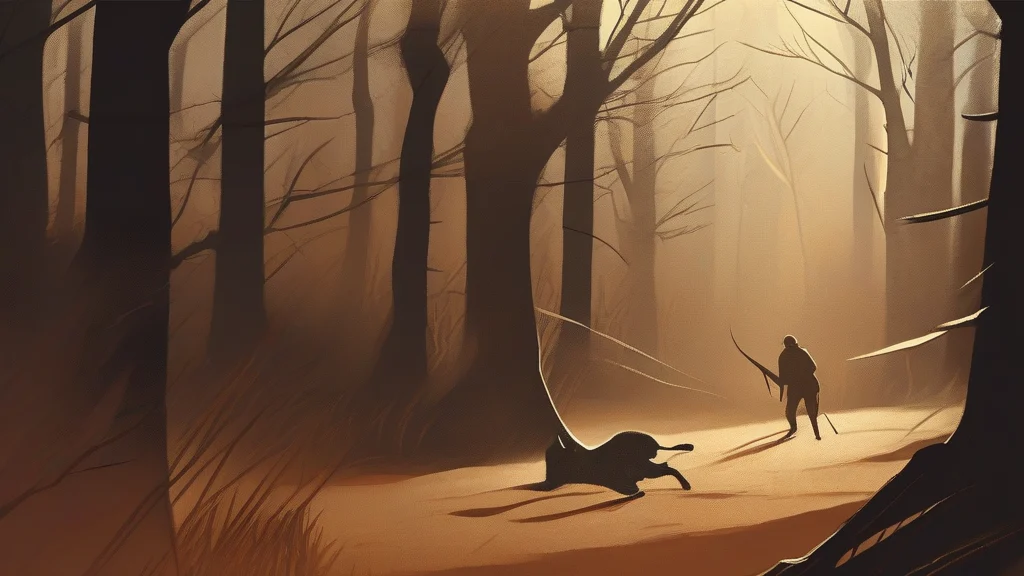
What does hunted mean?
Hunted is the past tense and past participle of hunt and is also used as an adjective. As a verb form, it describes pursuing, chasing, or searching for someone or something, often with urgency: a criminal may be hunted by police, while a rare book may be hunted down by a determined collector. As an adjective, hunted describes someone or something that is being pursued or remains exposed to danger, as in a hunted animal or a hunted witness. The word often conveys more intensity than searched for and may suggest that the person doing the hunting is persistent and determined. It can also imply unfair or unequal treatment, particularly when someone is hunted because of their identity, beliefs, or political position. In ordinary descriptions of animals, hunted prey refers to game pursued for food or sport. Although hunted looks like a separate adjective, its meanings are closely connected to the older English verb hunt.
Pursued or chased with the intention of catching, confronting, or finding; searched for persistently.
"Divers hunted the wreck until they finally located it."
The passive form can express danger or exposure to capture: The witness was hunted by an unidentified group.
Sought, pursued, or continually endangered by capture.
"The exhausted soldier looked like a hunted man."
This use often describes a person or animal under persistent pursuit and may suggest fear, desperation, or vulnerability.
The word reaches back to Old English, where hunting was both the pursuit of game and a dangerous contest between people and animals.
Reviewed by Deb Chak, Editor. AI-assisted content curated by RJS Tech Solutions LLP.
Where does hunted come from?
Hunted is the regular English past tense and past participle of hunt. The base noun and verb derive from Old English forms such as hunt and huntian, with related forms appearing in other Germanic languages. Modern hunted follows the regular addition of the suffix -ed to the base verb.
Related word forms
How hunted is actually used
The word is common in both formal and informal English. It can carry an emphatic sense of relentless pursuit, danger, or desperate searching. As a passive participle, it normally follows forms of be, such as was hunted or has been hunted.
Easily confused with hunted
Hunted means pursued or searched for, whereas haunted means troubled by a ghost, spirit, or persistent memory.