
What does idioplasm mean?
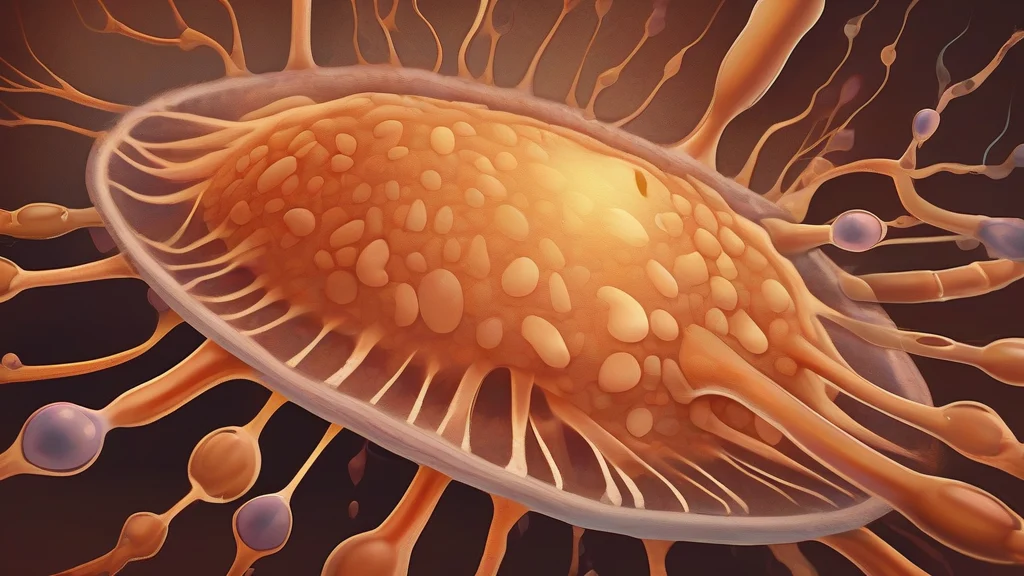
Idioplasm is a rare historical biological noun denoting a hypothetical substance or principle believed to carry inherited characteristics in reproductive cells. It was associated with theories that attempted to explain heredity through special materials transmitted during cell division, before the molecular basis of inheritance was understood. The term appears in historical discussions of genetics, cytology, and cell theory, but it is not standard vocabulary in contemporary biology. In its original context, idioplasm distinguished a proposed hereditary substance from other cellular material and was connected with ideas about the transmission of traits from parents to offspring. Today, the word is chiefly encountered in scholarly or historical sources, where it may serve as evidence of an earlier scientific framework for thinking about inheritance.
nounA hypothetical hereditary substance or principle in reproductive cells that is supposed to determine the distinctive characters of an organism. The term is chiefly used in historical theories of heredity.
- A hypothetical hereditary substance or principle in reproductive cells, formerly proposed to determine an organism's distinctive characters.
"The idioplasm theory proposed that hereditary traits are carried by a special substance within the cell nucleus."
"According to the idioplasm theory, the chromosomes preserve the hereditary material that guides development."
"The concept of idioplasm was influential in early discussions of cell division, inheritance, and variation."
Rare; normally used only in historical or specialist biological contexts.
"The researchers debated whether idioplasms could account for the inheritance of acquired characteristics."
Idioplasm belongs to the history of biology: it was once proposed as the special material that carries inherited traits from parents to offspring.
Reviewed by Deb Chak, Editor. AI-assisted content curated by RJS Tech Solutions LLP.
Where does idioplasm come from?
The word combines Greek idios, meaning “one's own” or “peculiar,” with plasma, meaning “formation” or “something molded,” ultimately referring to a distinctive formative material. It emerged in nineteenth-century biological discussion as the name for a proposed hereditary substance. Its development reflects early attempts to identify a specific cellular carrier of inherited traits, before the role of chromosomes and DNA was established.
Related word forms
How idioplasm is actually used
This is a rare, chiefly historical term in biology. Modern biology normally refers to genetic material, genes, or DNA rather than to idioplasm.
Easily confused with idioplasm
An idiom is a phrase whose meaning is not identical to the literal meanings of its individual words, whereas idioplasm is an old biological term for a proposed hereditary substance.