
What does iguana mean?
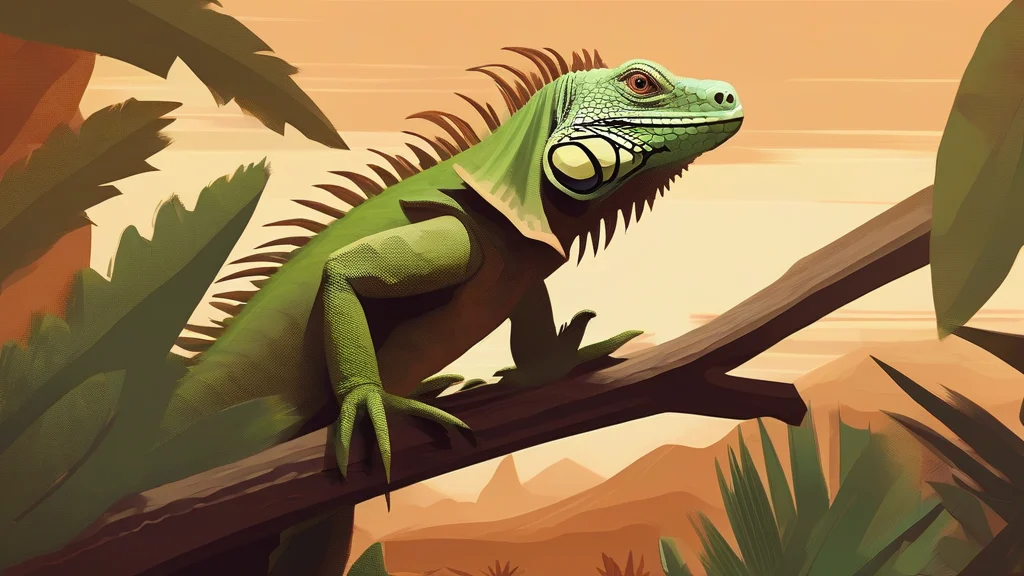
An iguana is a large lizard belonging to a group found mainly in tropical parts of the Americas and the Caribbean. The most familiar species is the green iguana, recognized by its long tail, clawed feet, and often a crest along the neck and back. Iguanas are primarily plant eaters, eating leaves, flowers, and fruit, although their diets can vary by species. Many spend much of their time in trees or basking in sunlight, and they communicate through visual displays and changes in body color. The word is also used more broadly for related lizards with similar body shapes. Iguanas can regrow a tail after losing it, and some species live for many years in captivity. Although their imposing appearance may suggest fierceness, they are generally not aggressive toward people unless threatened.
nounA large, typically herbivorous lizard found in tropical regions of the Americas and the Caribbean, with a long tail, strong legs, and often a prominent crest along its back. The common term is especially associated with the green iguana.
- A large tropical American lizard, especially the green iguana.
- Any member of the iguana family of lizards, including various terrestrial, arboreal, and semi-aquatic species.
"An iguana basked on a branch above the river, its bright scales almost disappearing among the leaves."
"The visitor watched a magnificent iguana climb the trunk of a palm tree."
"Iguana populations are threatened by habitat loss and illegal capture for the pet trade."
The regular plural adds “-s” to the singular form.
"Several iguanas were feeding on flowers in the tree canopy."
Iguanas are remarkable for their ability to regrow a lost tail, a survival trick that can help them escape predators.
Reviewed by Deb Chak, Editor. AI-assisted content curated by RJS Tech Solutions LLP.
Where does iguana come from?
The English word comes through Spanish “iguana,” which in turn derives from an Indigenous Caribbean word recorded in the early colonial period. The exact form and pronunciation of that Indigenous source have been debated by scholars, so its precise language of origin should be treated cautiously. The Spanish word entered English during the period of European exploration and colonization of the Americas, when many unfamiliar animals were described using Indigenous names.
How iguana is actually used
In everyday use, “iguana” usually refers to the green iguana, although the word can also be used more broadly for members of the iguana family. The term is sometimes applied to other large lizards, but such usage is less precise.