
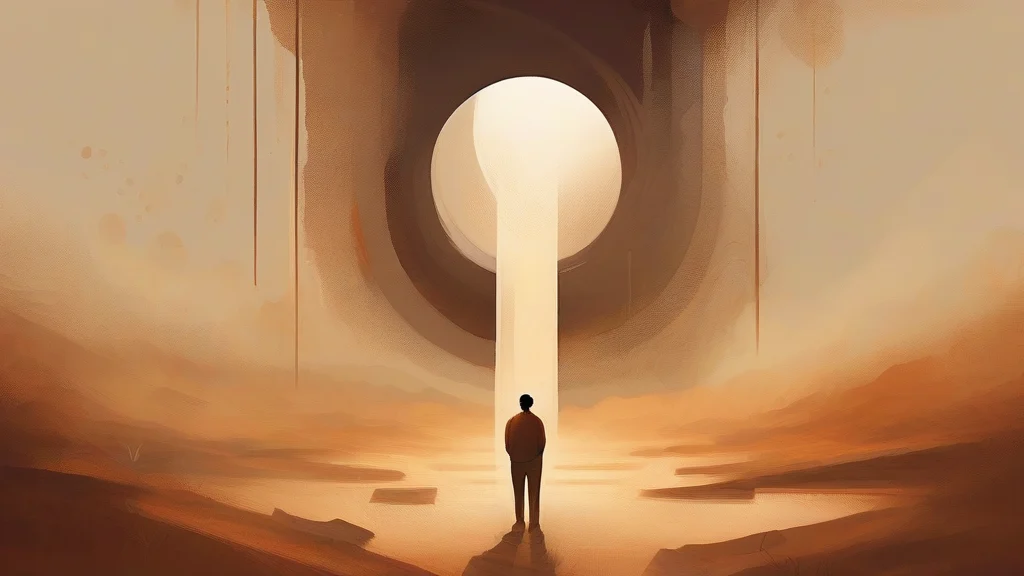
What does imagining mean?
“Imagining” is the present participle and gerund of “imagine,” meaning to form ideas, pictures, or possibilities in the mind. It is common in both everyday and formal English: someone may be imagining a place, a future event, or the reasons behind another person’s actions. In its gerund form, it can also function as a noun, referring to the mental act of imagining itself, although the related noun “imagination” is more usual when emphasizing creativity or invention. The word often conveys a distinction between what is actually happening and what exists only in the mind. “Imagining the possibility” suggests careful consideration of how something might occur, while “imagining a better world” emphasizes creative or idealistic thought. It can also carry a slightly informal or speculative tone when used with unreal or unlikely situations.
Forming a mental picture, idea, or conception of something.
"She imagined herself walking through the forest."
The present participle form is commonly used after auxiliary verbs, for example: “They have been imagining alternatives.”
The act or process of forming images or ideas in the mind.
"The imagining of the future can inspire both creativity and anxiety."
This noun usage is less common than “imagination,” especially when referring to a creative mental process.
The plural is uncommon but valid, particularly for separate mental images or notions.
"Her imaginings of a perfect home were more elaborate than her actual plans."
Imagining turns possibility into a mental playground, where absent things can be explored before they become real.
Reviewed by Deb Chak, Editor. AI-assisted content curated by RJS Tech Solutions LLP.
Where does imagining come from?
The word “imagining” derives from “imagine,” which comes through Old French from the Latin “imaginari,” meaning to form an image or picture in the mind. The Latin verb is related to “imago,” meaning image or likeness. English “imagination” and “imaginative” developed from the same Latin root, reflecting the broader history of mental representation and creative thought.
Related word forms
How imagining is actually used
“Imagining” is widely used in both formal and informal contexts. It can suggest creative mental activity, as in “imagining a better future,” or simply mean considering a possibility, as in “I can’t imagine why she left.”
Easily confused with imagining
“Imagining” means creating a mental representation or conception, whereas “imagining” can also be used in the closely related sense of supposing something to be the case.