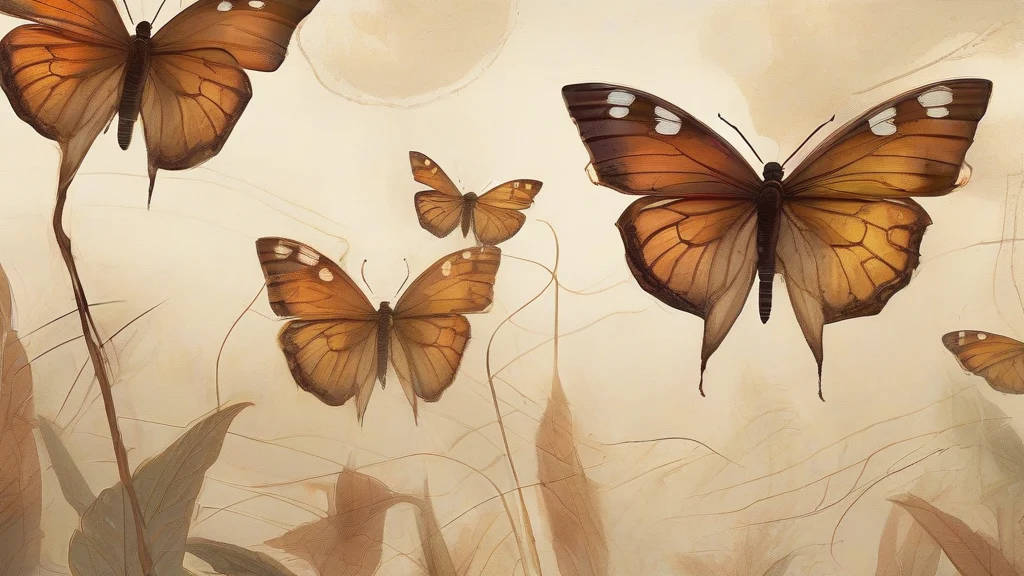
What does imago mean?
The term imago refers to the final, fully developed stage of an insect's life cycle, particularly those that undergo complete metamorphosis, such as butterflies, beetles, and flies. This stage follows the pupal or chrysalis phase and is characterized by the insect's adult features, including fully developed wings, reproductive organs, and often distinctive coloration or patterns. The imago is the stage at which the insect reaches maturity and is capable of reproducing. Understanding the imago stage is crucial in entomology, the study of insects, as it helps scientists classify and study insect life cycles, behaviors, and ecological roles. The word can also be used more broadly to describe a perfect or mature form of something, though this usage is less common.
nounThe fully developed adult stage of an insect, especially one that undergoes complete metamorphosis, such as a butterfly or beetle. The imago is the final stage in the life cycle of such insects.
- The fully developed adult stage of an insect.
- A perfect or mature form of something.
"The beautiful imago of the monarch butterfly emerged from its chrysalis."
"The imago of the dragonfly has large, compound eyes."
"The artist's sculpture was the imago of her ideal woman."
Both 'imagos' and 'imagoes' are used as plural forms, with 'imagos' being more common in technical literature.
"The entomologist studied several imagos of the rare species."
Reviewed by Deb Chak, Editor. AI-assisted content curated by RJS Tech Solutions LLP.
Etymology of imago
The word imago originates from Latin, where it means 'image' or 'copy'. In biological contexts, it was first used in the 19th century to describe the adult stage of insects that undergo complete metamorphosis. The term is related to the concept of an image or representation, likely because the imago stage presents a mature, often dramatically different form compared to the juvenile stages of the insect.
How imago is actually used
Formal or technical in biological contexts; less common in general usage.