
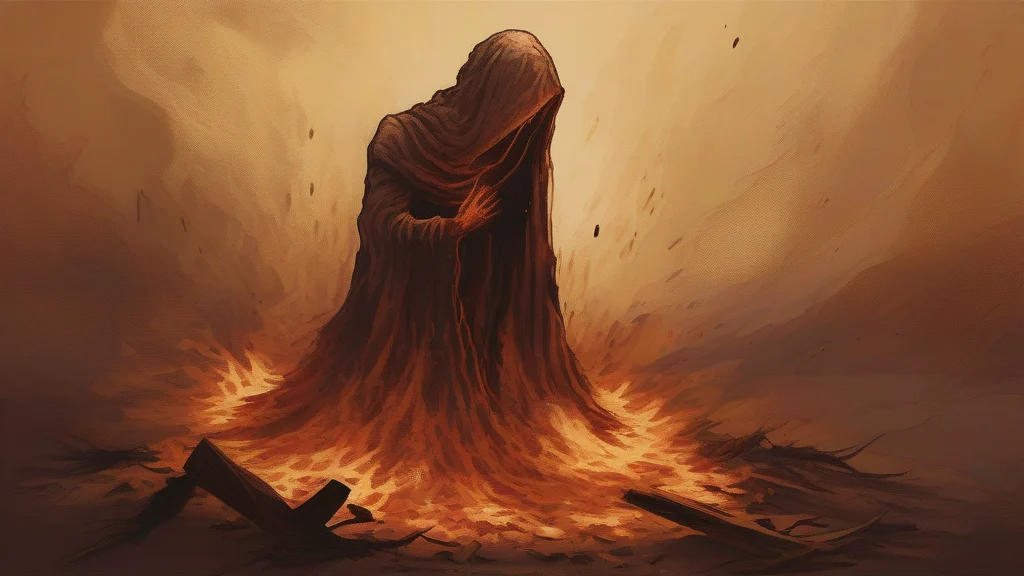
What does immolated mean?
Immolated is the past tense and past participle of immolate, meaning to burn someone or something deliberately. Its strongest associations are with sacrifice and violent destruction: a person or animal may be burned as an offering, or an object such as a vehicle, building, or bridge may be deliberately set alight to hinder an enemy. In contemporary reporting, the word often conveys a more intense or deliberate act than the ordinary word “burned,” although it is not restricted to ritual contexts. “The attackers immolated the vehicles” and “the body was immolated” are therefore natural and appropriately solemn constructions. The term is formal and sometimes emotionally charged, so writers often choose it when the intention behind the burning is especially significant, tragic, or destructive.
verbTo burn someone or something deliberately, especially as a sacrifice or as an act of destruction.
- To burn someone or something deliberately, especially as a sacrifice or as an act of destruction.
"The retreating soldiers immolated the bridge to prevent their enemies from crossing."
"The protesters were accused of having immolated the building during the confrontation."
"According to the account, the animal was immolated as part of the ancient ritual."
From ritual sacrifice to wartime destruction, immolate carries the unmistakable image of deliberately consigning something to the flames.
Reviewed by Deb Chak, Editor. AI-assisted content curated by RJS Tech Solutions LLP.
Where does immolated come from?
The word comes through French from the Latin verb immolare, meaning “to sacrifice as a victim,” especially by fire. Its historical associations were therefore primarily religious rather than merely destructive. The modern form immolated became common in English in the 17th century for acts of burning that were deliberate, sacrificial, or exceptionally destructive.
Related word forms
How immolated is actually used
The word is formal and often suggests a deliberate or ritualized act rather than an accidental fire. It is especially associated with destruction and sacrifice, and can describe burning a person, an animal, or an object.
Easily confused with immolated
“Immolated” is the past tense and past participle of immolate, whereas “immolate” is the infinitive or present-tense form.