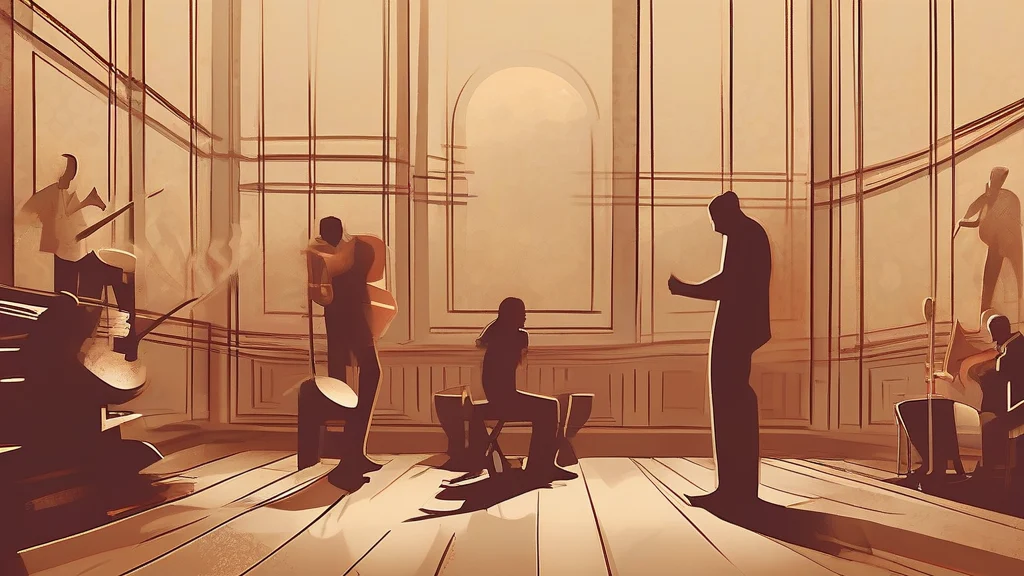
What does improv mean?
Improv refers to the act of creating something spontaneously, without prior planning or preparation. In the context of performing arts, improv involves creating dialogue, action, or music on the spot, often in response to a prompt or situation. This can include comedy sketches, musical solos, or dramatic scenes. Improv is a valuable skill for performers, as it requires creativity, quick thinking, and adaptability. The term improv is often used interchangeably with improvisation, and is commonly associated with comedy troupes, theater groups, and jazz musicians. Improv can be used to entertain, to explore new ideas, or to challenge oneself creatively. Overall, improv is a versatile and dynamic form of artistic expression that continues to evolve and grow in popularity.
The act of improvising or creating something spontaneously.
"The comedian's improv skills were impressive."
To create or perform something spontaneously, without prior planning or preparation.
"The musician improvised a solo during the concert."
Less common usage, often used in the context of music or theater.
Rarely used, but can refer to multiple instances or performances of improv.
"The group performed several improvs during their show."
Reviewed by Deb Chak, Editor. AI-assisted content curated by RJS Tech Solutions LLP.
Etymology of improv
The word improv is derived from the Italian word 'improvvisare', which means 'to improvise'. This word is itself derived from the Latin 'improvisus', meaning 'unforeseen' or 'unprepared'. The term improv has been used in English since the 19th century to describe the act of improvising or creating something spontaneously.
How improv is actually used
Often used in the context of comedy, theater, or music, but can also refer to improvisation in other areas, such as dance or poetry.